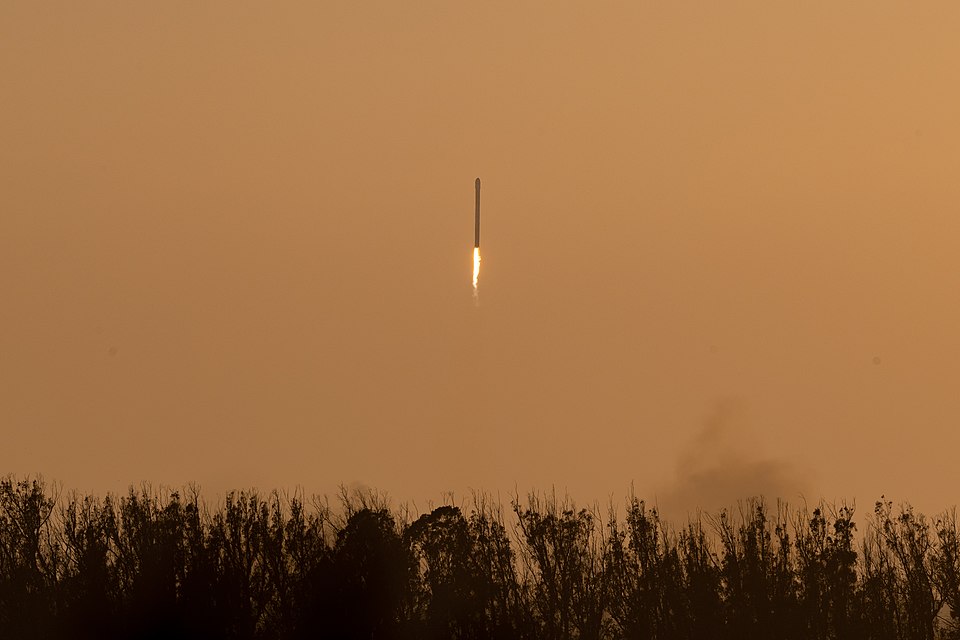
Mission Highlight: Stairway to Seven
Firefly Aerospace is targeting Friday, Feb. 20, at 7:20 p.m. EST for the launch of its Alpha rocket from Space Launch Complex 2 West at Vandenberg Space Force Base in California. The mission, titled “Stairway to Seven,” represents the seventh flight of the Alpha vehicle and a return to flight following a launch failure during Flight 6 on April 29, 2025.
The Alpha is a small-lift launch vehicle capable of delivering over 2200 lbs (1,000 kg) of payload into low Earth orbit (LEO). Designed to serve a mix of government and commercial clients, the rocket focuses on providing on-demand orbital access rather than the rideshare models common with larger boosters. While Alpha currently operates out of Vandenberg in California, Firefly is expanding its reach. The company plans to bring new launch capabilities to the Mid-Atlantic Regional Spaceport (MARS) in Virginia as early as 2026, followed by international operations from the Esrange Space Center in Sweden in 2027.
“Stairway to Seven” is the final mission for the Alpha rocket in its current Block 1 configuration. To prepare for the future, the vehicle will carry several Block 2 subsystems, including new in-house avionics and upgraded thermal protection. Success this week will clear the way for Flight 8, which will debut the larger, more powerful Block 2.
The mission comes at a crucial moment for Firefly as they work to stabilize Alpha’s flight record. To date, the program has seen mixed results, with only Flights 3 and 5 being total successes. The maiden flight in 2021 failed when an early engine shutdown occurred, while Flights 2 and 4 were partial failures after issues with the upper stage left payloads in lower-than-intended orbits.
The FAA recently cleared Alpha for flight after a thorough investigation into Flight 6. According to Firefly, that mission ascended normally until stage separation, at which point the first stage booster suffered a rupture. This created a pressure wave that struck the second stage, “leading to the loss of the engine’s nozzle extension and substantially reducing stage two thrust.” To prevent a recurrence, Firefly has thickened the thermal protection layers on the first stage and adjusted the flight software to reduce the angle of attack.
Other missions this week
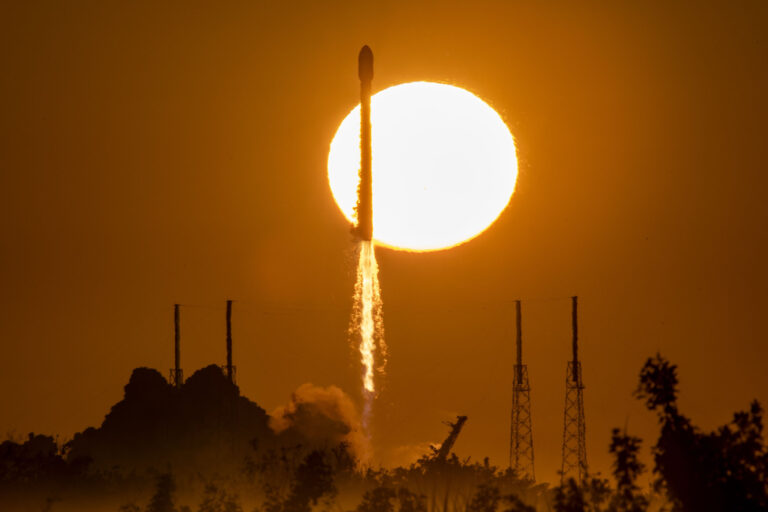
On Wednesday, Feb. 18, SpaceX kicks off its weekly schedule with the Starlink Group 17-25 mission from Vandenberg Space Force Base at 3:00 a.m. EST. The Falcon 9 booster is expected to land on the droneship Just Read the Instructions in the Pacific Ocean.
Later that afternoon on Wednesday, Feb. 18, SpaceX will launch the Starlink Group 10-36 mission from Cape Canaveral Space Force Station at 5:00 p.m. EST. This mission marks a notable operational milestone, as it is the first Starlink launch scheduled to feature a booster landing within Bahamian waters on the droneship A Shortfall of Gravitas.
On Saturday, Feb. 21, the SpaceX West Coast team returns to the pad for the Starlink Group 17-26 mission from Vandenberg at 3:00 p.m. EST. The booster is slated to land on Of Course I Still Love You.
Closing out the week on Saturday, Feb. 21, SpaceX will launch the Starlink Group 6-104 mission from Cape Canaveral at 9:04 p.m. EST, with the booster targeting a landing on A Shortfall of Gravitas.
Last week’s recap
The second week of February saw a heavy international launch schedule and a high-profile crew rotation.
On Wednesday, Feb. 11, SpaceX successfully launched Starlink Group 17-34 from Vandenberg. This was followed by a triple-header on Thursday, Feb. 12: Chinarocket launched a Jielong 3 from a sea platform, ULA successfully deployed the USSF-87 mission carrying GSSAP 7 & 8 satellites on a Vulcan rocket, and Roscosmos launched the Elektro-L n°5 weather satellite.
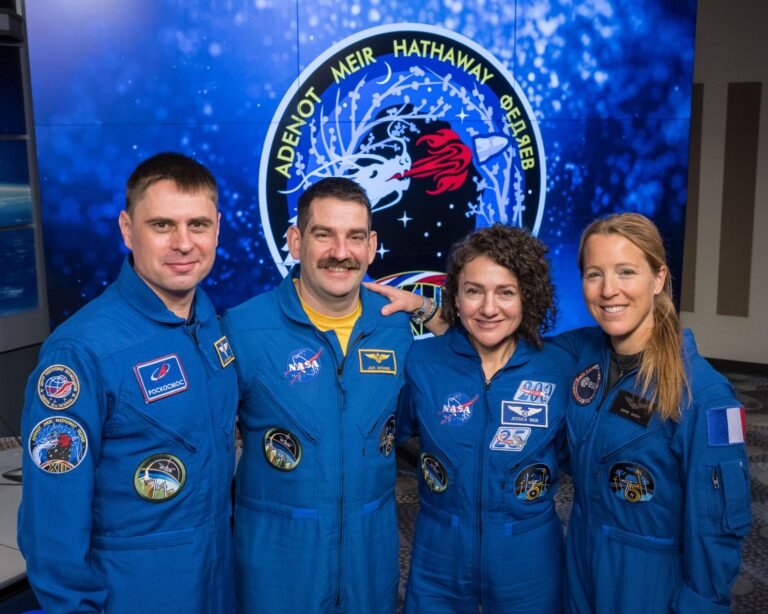
Perhaps the highest-profile launch of the week occurred on Friday, Feb. 13, when NASA and SpaceX successfully launched the Crew-12 mission to the International Space Station. The international crew, led by Commander Jessica Meir, returned the station to full research capacity following an expedited launch schedule after the early return of Crew-11. The week concluded with two additional Starlink launches on Saturday, Feb. 14.
Looking ahead
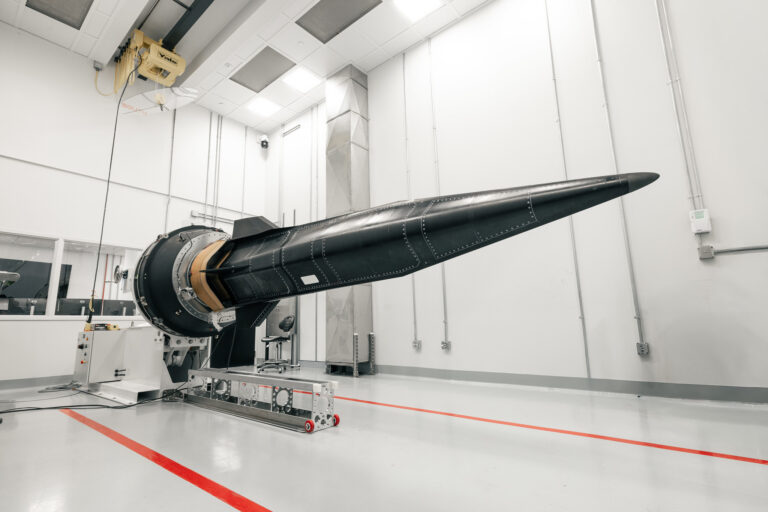
On Monday, Feb. 23, Rocket Lab is targeting 3:00 p.m. EST for the launch of the “That’s Not A Knife” mission from Wallops Flight Facility in Virginia. This HASTE (Hypersonic Accelerator Suborbital Test Electron) payload will deploy the DART AE, a scramjet-powered hypersonic vehicle developed by Australian company Hypersonix.
On Tuesday, Feb. 24, SpaceX is slated to launch the Starlink Group 6-110 mission from Cape Canaveral at 3:56 p.m. EST.
On Tuesday, Feb. 24, Japan’s Space One will attempt the third flight of its KAIROS rocket from Space Port Kii at 9:00 p.m. EST. This is a critical mission for the startup following two previous launch failures.
On Wednesday, Feb. 25, SpaceX is scheduled to launch Starlink Group 17-23 from Vandenberg at 3:00 a.m. EST.