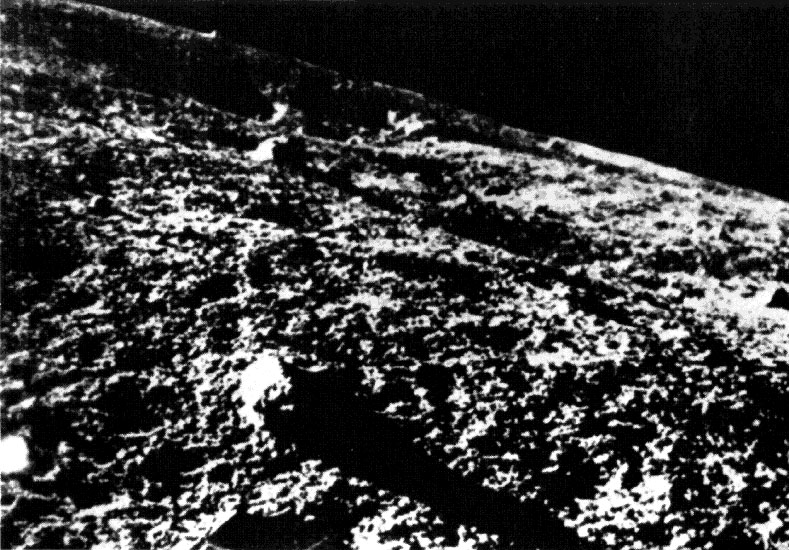
On Jan. 31, 1966, the Soviets launched Luna 9 from Baikonur Cosmodrome with a plan to land on the surface of the Moon. Missions in the three previous years had been fraught, with Luna 4 and 6 missing the Moon entirely, and Luna 5, 7, and 8 crashing into its surface.
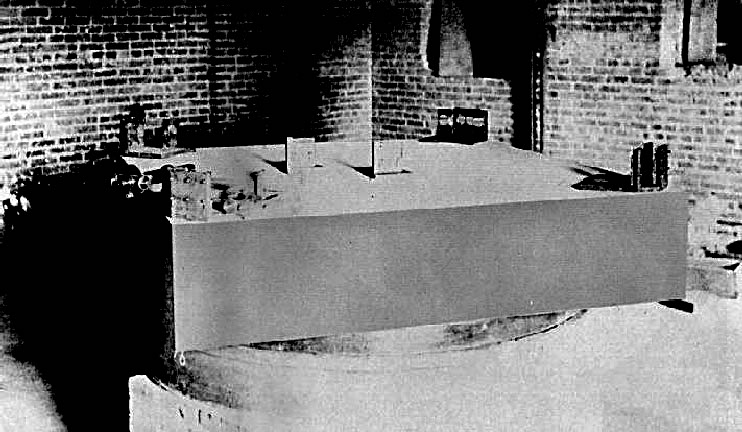
Three days later, at an altitude of 5,157 miles (8,300 kilometers) above the surface of the Moon, Luna 9 aligned itself for its attempt and began the descent. Retrorockets kicked in at an altitude of about 47 miles (75 km), burning for 46 to 48 seconds. This slowed the spacecraft from 1.6 miles per second (2.6 km per second) to 82 feet, or about 0.015 miles, per second (25 meters per second). The descent took about an hour; as the surface neared, a shock-resistant capsule separated from the rocket and impacted the Moon in the Oceanus Procellarum (Ocean of Storms). The 220-pound (100 kilogram) capsule opened four “petals” to stabilize itself, and deployed its antennas, transmitting the first photographs from the Moon. This first landing proved that, rather than being covered in unstable dust as had been theorized, the lunar surface was firm enough to support a spacecraft.