On Feb. 2, Groundhog Day, tradition holds that if the groundhog sticks his head out of his burrow and sees his shadow, we’ll have six more weeks of winter. But if the weather is cloudy, it means spring is right around the corner. The tradition was brought to America long ago by German immigrants — although the hedgehog seemed to be the animal of choice in the old country — and first observed in Punxsutawney, Pennsylvania, in 1887.
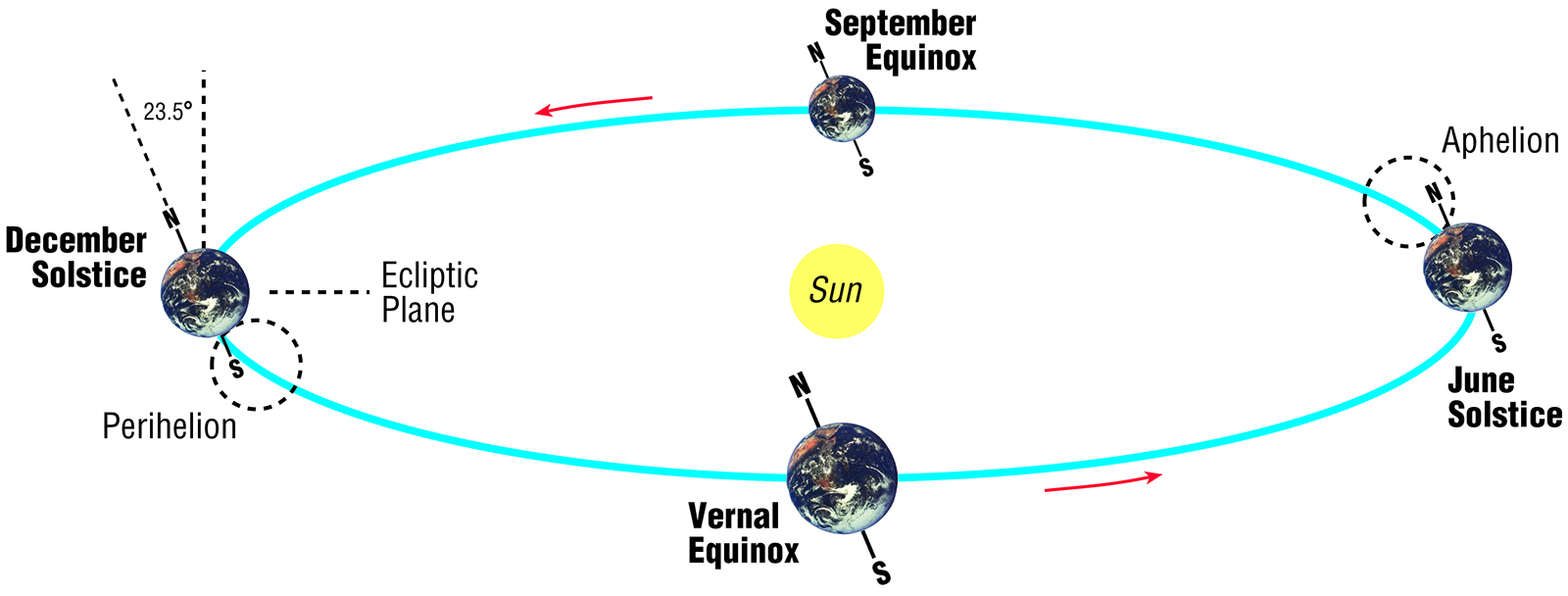
What does any of this have to do with astronomy? It turns out the origin of Groundhog Day is connected to the Sun’s movement across the sky. Groundhog Day is one of the four so-called cross-quarter days, which mark the midpoints between the solstices and equinoxes. Groundhog Day comes approximately midway between the winter solstice and the vernal equinox. Other cross-quarter days fall near May Day and Halloween.
If you pull out a calendar and count the number of days between solstices and equinoxes, you’ll find the cross-quarter days don’t fall precisely on the days we celebrate them, but rather a few days later. And the origins of this discrepancy also come from astronomy. The “holidays” were fixed in our calendars relatively recently, long after the traditions sprang up. And the precession of the equinoxes caused by the Sun’s and Moon’s gravitational pull on Earth’s equatorial bulge has pushed the holidays earlier than the cross-quarter days. It’s something to think about when your local newscasters breathlessly report groundhog behavior today.