Built, integrated, tested, and launched in 22 months at under $80 million, the Clementine probe was devised jointly by NASA and the Ballistic Missile Defense Organization, and epitomised the “faster, better, cheaper” management ethos, testing miniaturized sensors, multimode propulsion and attitude-control systems, and gallium arsenide solar cells in deep space. When the spacecraft rose from Space Launch Complex 4 West at California’s Vandenberg Air Force Base atop a Titan IIG rocket at 8:34 a.m. PST on Jan. 25, 1994, it was America’s first voyage to the Moon in over two decades.
Clementine entered lunar orbit on Feb. 19, 1994. Results from its bistatic radar experiment hinted that water-ice could endure near the Moon’s poles, inside eternally shadowed craters where temperatures never creep above -382 degrees Fahrenheit (-230 degrees Celsius). Such areas are sufficiently cold to permanently entrap water molecules delivered by comets or water-bearing meteoroids. Perceptions of the Moon in popular thought changed virtually overnight: from the lifeless, desiccated place visited by Apollo astronauts in 1969-1972 to a world which might nourish a thriving future human colony.
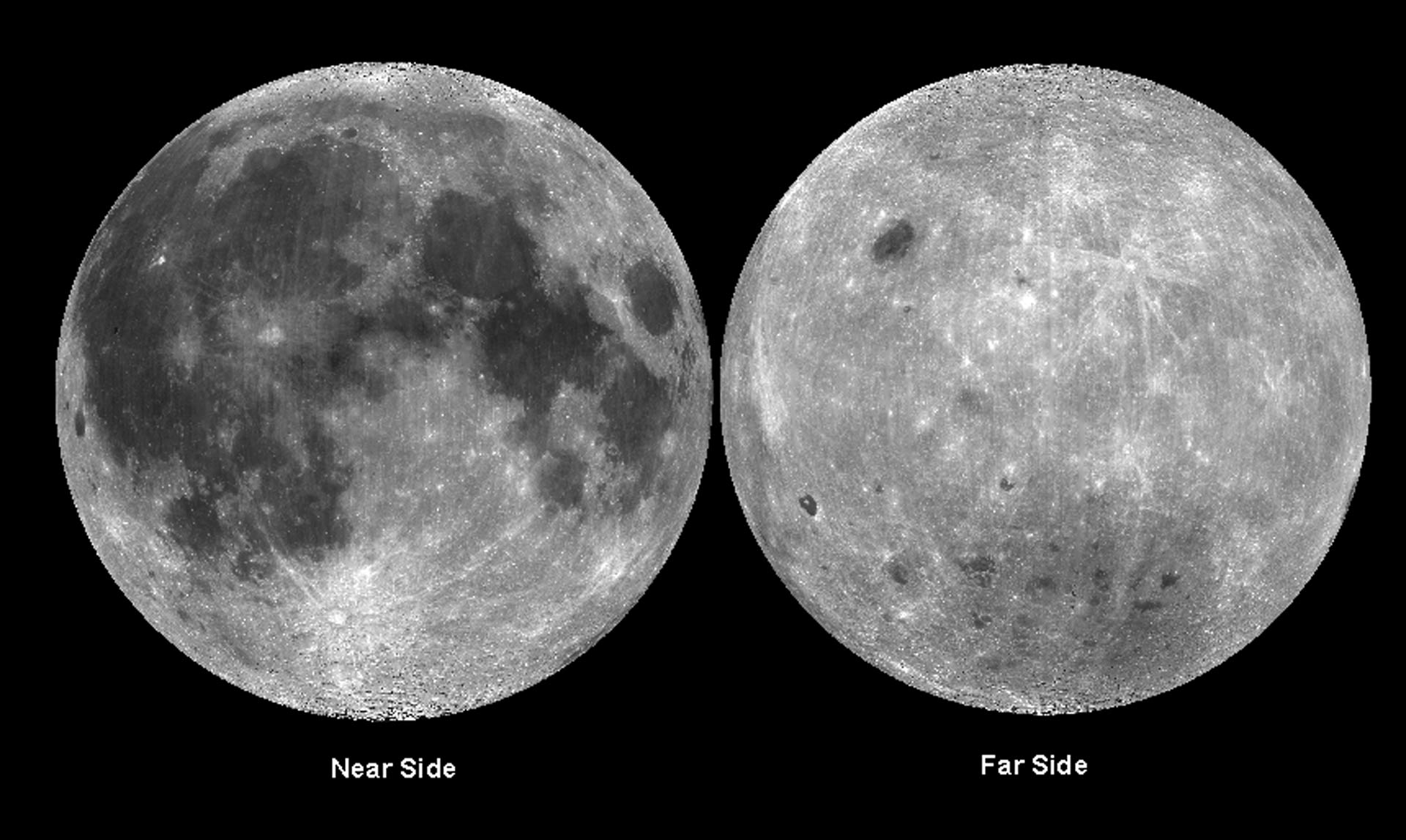
For 71 days and 297 lunar orbits, Clementine imaged our nearest neighbor and transmitted 1.6 million images, many at resolutions of 330 feet (100 m). It mapped the Moon’s whole surface, including the poles — a staggering 14.6 million square miles (38 million square km) — at near ultraviolet through visible to far infrared wavelengths. And it scrutinised the Apollo landing sites, measured mare basalt compositions on the lunar farside, and acquired stereo imagery of the colossal Mare Orientale impact basin.
With this first part of its mission done, Clementine set its sights on Geographos, a highly elongated stony asteroid some 1.6 miles (2.5 km) long. Sadly, on May 7, 1994, a computer glitch caused one of Clementine’s attitude-control thrusters to misfire for 11 minutes, wasting precious fuel and inducing an 80-revolutions-per-minute spin. It could still reach Geographos, but the anomaly negated useful data-return so the spacecraft was kept in geocentric orbit. In June, a power-supply glitch rendered Clementine’s telemetry unintelligible and the mission ended a few months later in August 1994.