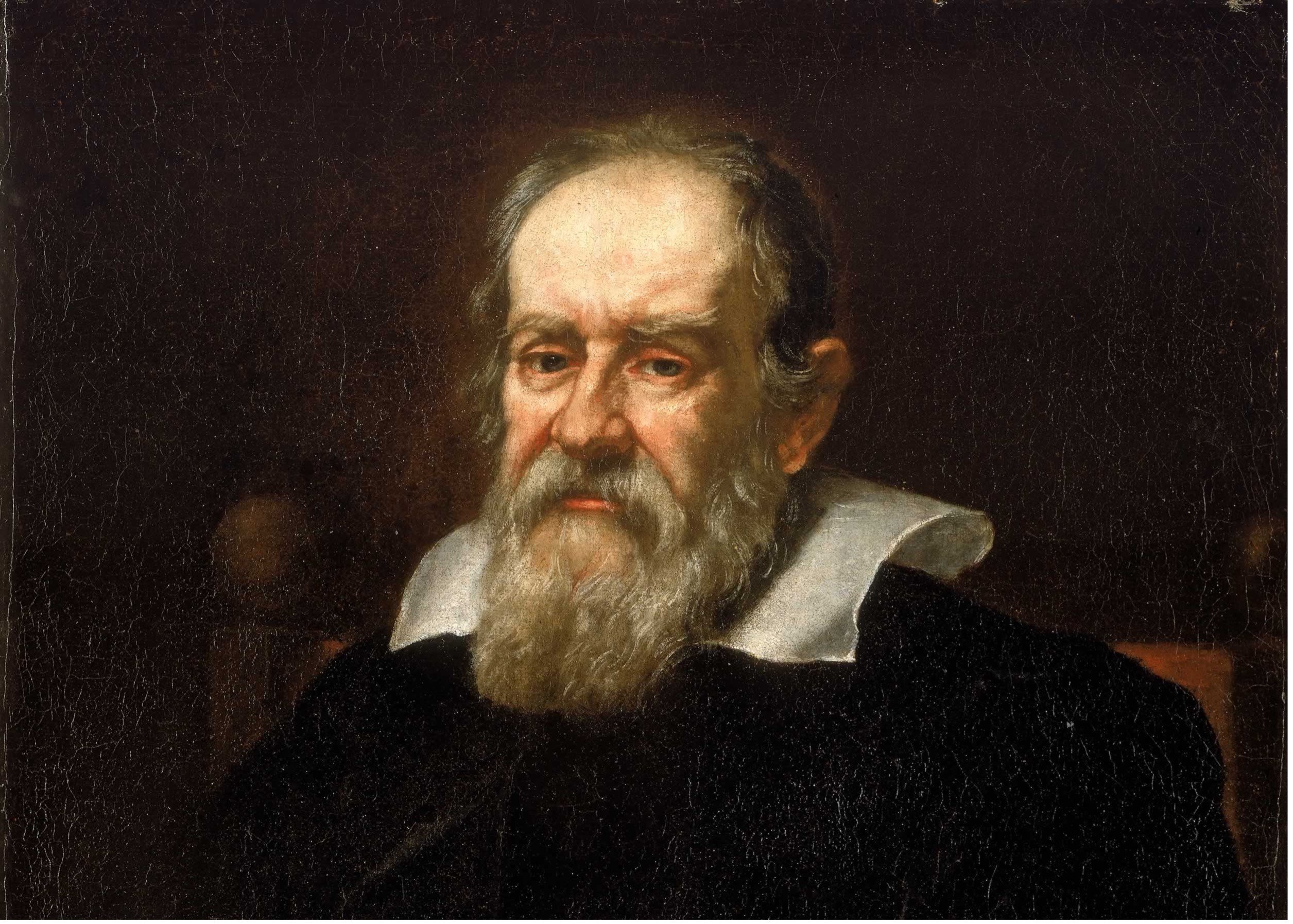
Italian mathematician Galileo Galilei was born in Feb. 15, 1564, in Pisa. Often summarized as the father of modern science, certainly a polymath and a brilliant thinker who operated on a high intellectual level, Galileo had innovative thoughts about nearly everything he contemplated. And one thing he often contemplated was optics. He envisioned lenses that could magnify objects at great distances and could be practical aids in many ways.
Much to his horror, Galileo discovered Dutch opticians produced simple lenses that could easily magnify distant objects, and these devices were for sale as novelties. Galileo had fancied creating his own small telescopes, and thought he could make considerable income from it. Shocked by the news of available small telescopes, he spent essentially one weekend in his workshops and independently invented his own telescope, simply from what he had heard and imagined himself.
On Nov. 30, 1609, he climbed to the top of his house in Padua. Using one of his early telescopes to peer at the nearby spires of the Basilica of St. Anthony, Galileo slowly moved his telescope’s aim over to a nearby object, the Moon. In doing so, he made one of the first telescopic astronomical observations in history. Over the coming weeks he observed numerous objects in the sky. He saw the small moons orbiting the planet Jupiter, like a miniature solar system. He observed that the Milky Way was composed of innumerable stars. He recorded the crescent phases of Venus. He sketched the pockmarked, imperfect face of the Moon. For Galileo, the nature of the cosmos was opening up wide. He wrote about many of his observations in the classic work Sidereus Nuncius (“Starry Messenger”), published in 1610, the first scientific work based on telescopic observations.