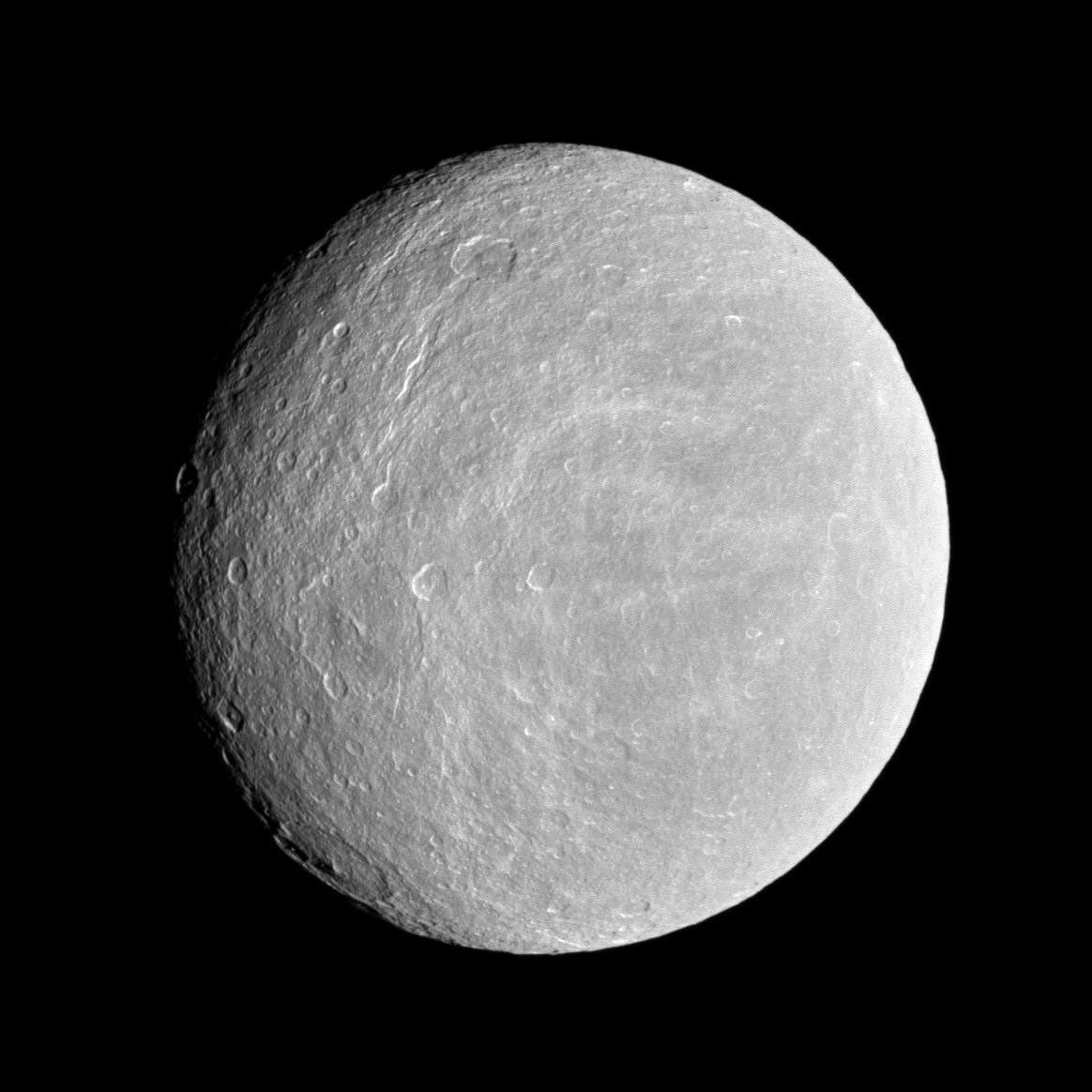
Across the span of 1671 through 1684, Italian-French astronomer Giovanni Cassini discovered four moons of Saturn while working under the patronage of King Louis XIV. Cassini collectively named the four “Sidera Lodoicea” – the “Stars of Louis.” But they’re better known as Iapetus, Rhea – his second find, discovered Dec. 23, 1672 – Tethys, and Dione. Rhea is the fifth closest moon to its planet, and the second largest of Saturn’s moons.
Only Titan, discovered by Christaan Huygens in 1655, predated Cassini’s finds, and after his 1684 discovery of Dione, none would be found until William Herschel spotted Mimas and Enceladus over a century later, in 1789. Hyperion followed in 1848 and Phoebe in 1898, with groups of moons and individuals added regularly since then. Most recently, in March of 2025, 128 small moons around the planet were confirmed, bringing Saturn’s total moon count to 274.