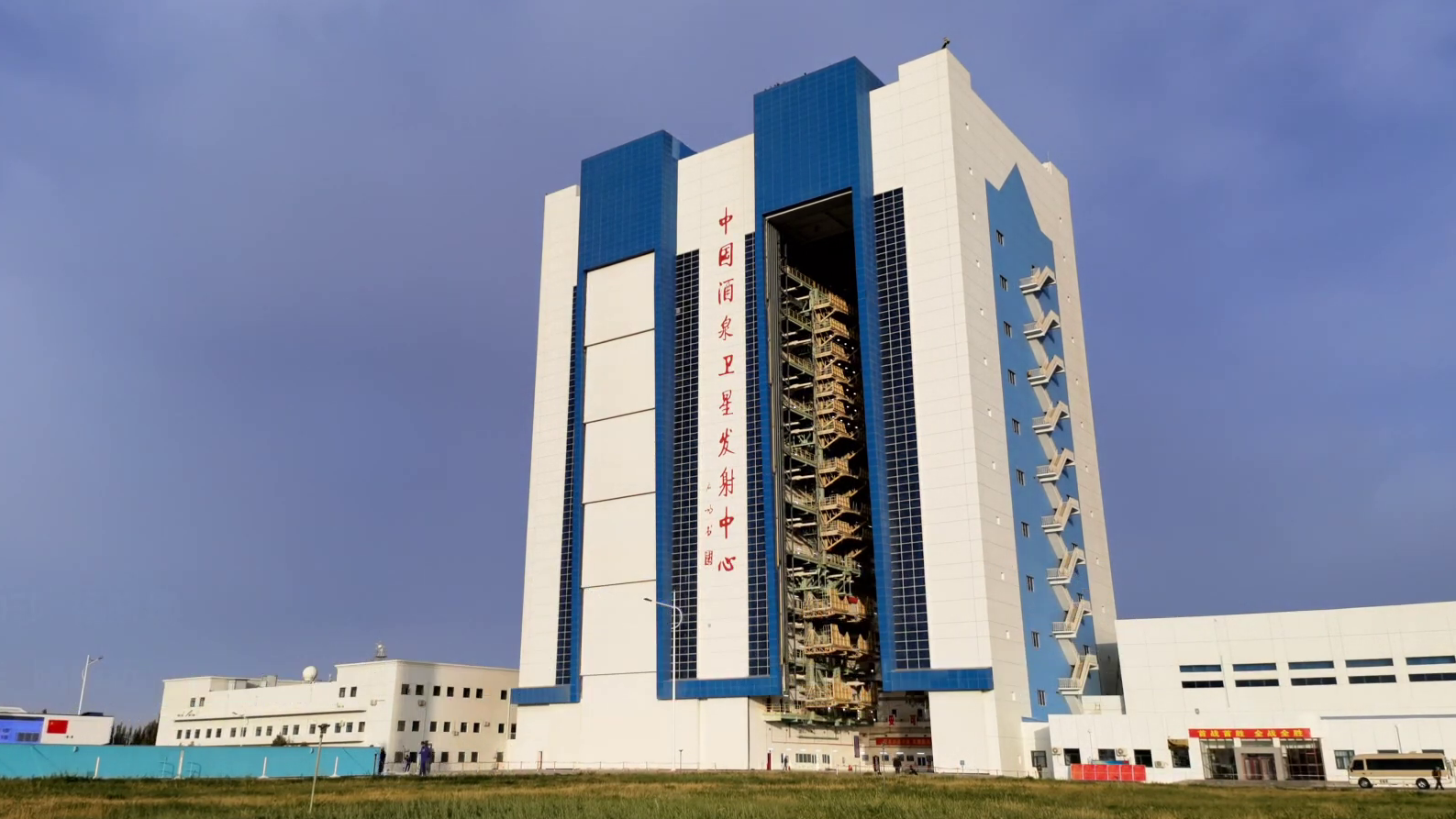
Mission highlight: Long March 12A demo flight
The mission highlight this week is the inaugural flight of China’s Long March 12A. Developed by the Shanghai Academy of Spaceflight Technology (SAST), the medium-lift rocket is scheduled to lift off on Monday, Dec. 22, at 9:00 p.m. EST from the Jiuquan Satellite Launch Center in Gansu Province, China. The flight follows a brief delay from last week’s scheduled launch.
This mission marks a big step in China’s push toward reusable launch technology. If the first stage successfully returns to its landing pad, the Long March 12A will become the first Chinese rocket to achieve a successful orbital-class vertical recovery. This state-backed effort by the China Aerospace Science and Technology Corporation (CASC) follows recent attempts by private Chinese firms to crack the technology. In Sept. 2024, Deep Blue Aerospace’s Nebula-1 nearly completed a high-altitude recovery test, but was destroyed upon impact. Earlier this month, LandSpace’s Zhuque-3 reached orbit, but its booster was lost during the final landing burn.
The Long March 12A is a two-stage vehicle that shares the 12.4-foot (3.8-meter) diameter of the standard Long March 12, ensuring compatibility with China’s rail transport infrastructure. However, the A model features a change in propulsion, utilizing liquid oxygen and methane rather than kerosene. The pursuit of a reusable launch vehicle aligns with the CASC’s goal of reducing launch costs and increasing flight frequency to support future satellite megaconstellations. For this demo, the booster is programmed to attempt a vertical landing on a designated pad located approximately 155 miles (250 kilometers) downrange.
Other missions this week
The final full week of 2025 features several international missions, including those rescheduled from earlier in the month.
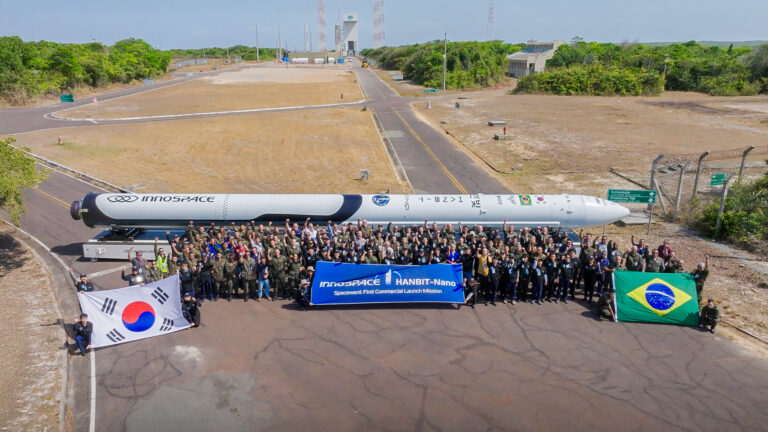
On Monday, Dec. 22, the week begins with a second attempt for South Korean startup Innospace. Their “Spaceward” mission is scheduled for 1:45 p.m. EST from the Alcântara Launch Center in Maranhão, Brazil. This flight of the Hanbit-Nano rocket aims to make Innospace the first private South Korean company to reach orbit. After a brief delay last week to replace an oxidizer feed component, the vehicle is carrying eight payloads into low Earth orbit.
Watch it here.
On Tuesday, Dec. 23, at 10:24 p.m. EST, the Indian Space Research Organisation (ISRO) launches an LVM3 from the Satish Dhawan Space Centre in Andhra Pradesh, India. The payload is BlueBird Block 2 FM1 for AST SpaceMobile. This satellite features a large commercial communications array designed to provide direct-to-cell broadband connectivity.
Earlier that day, at 9:00 a.m. EST, Roscosmos will launch a Soyuz 2.1a from the Plesetsk Cosmodrome in Arkhangelsk Oblast, Russia. The primary payload is Obzor-R n°1, an X-band radar imaging satellite for all-weather Earth observation.
On Thursday, Dec. 25, China’s CASC launches a Long March 8A from the Wenchang Space Launch Site in Hainan Province, China, at 6:25 p.m. EST. While the payload is officially undisclosed, the 8A variant is typically utilized for deploying satellite constellations.
On Friday, Dec. 26, China has two launches scheduled. First, at 1:30 a.m. EST, Chinarocket will launch a solid-fueled Jielong 3 from the Haiyang Oriental Spaceport in Shandong Province, China. Later, at 11:05 a.m. EST, a Long March 3B/E will carry the Fengyun-4C weather satellite into orbit from the Xichang Satellite Launch Center in Sichuan Province, China.
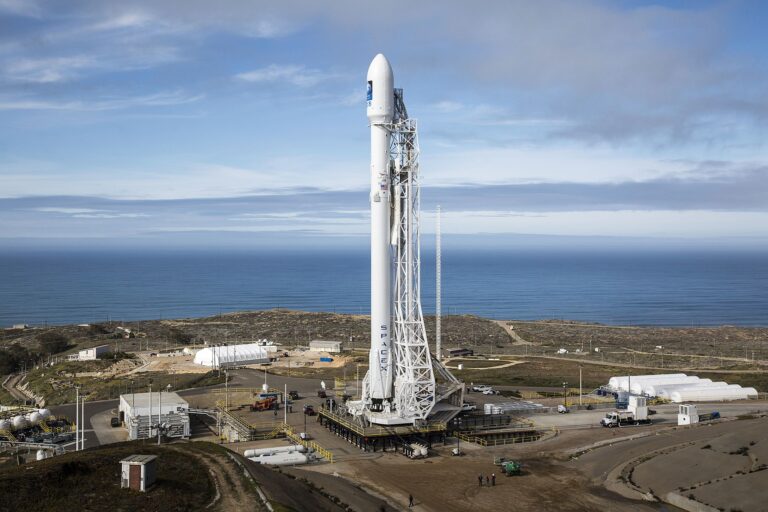
On Saturday, Dec. 27, SpaceX targets 9:08 p.m. EST for a Falcon 9 launch from Vandenberg Space Force Base in California. The mission, CSG-3, will deploy the third Cosmo-SkyMed Second Generation radar satellite for the Italian Space Agency. The first-stage booster is expected to return to Landing Zone 4.
On Sunday, Dec. 28, at 8:18 a.m. EST, a Soyuz 2.1b/Fregat-M mission will lift off from the Vostochny Cosmodrome in Amur Oblast, Russia. The rocket will carry the AIST-2T 01 and 02 stereoscopic imaging satellites and 20 small rideshare payloads.
Last week’s recap
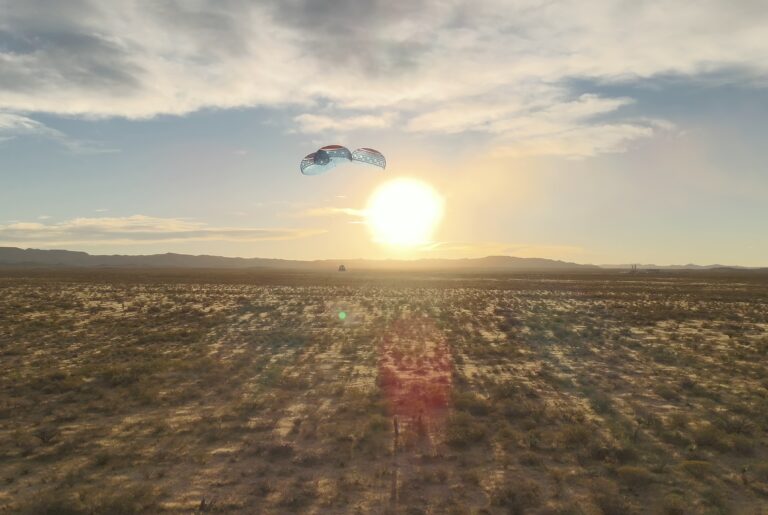
The week of Dec. 15–21 saw SpaceX continue its cadence with the Amazon Leo (LA-04) mission and multiple Starlink batches. Rocket Lab completed two Electron missions: “The Wisdom God Guides” from the Māhia Peninsula, New Zealand, and “Don’t Be Such A Square,” launched from the Wallops Flight Facility in Virginia for the U.S. Space Force. China successfully launched the Ziyuan-3 04 satellite from the Taiyuan Satellite Launch Center in Shanxi Province, China, and the classified TJSW-23 mission. Additionally, Blue Origin flew the NS-37 suborbital crewed mission from West Texas and Mitsubishi Heavy Industries (MHI) launched the Michibiki 5 navigation satellite from the Tanegashima Space Center in Kagoshima Prefecture, Japan.
Looking ahead
As the year ends, CASC is targeting a Long March 7A mission on Dec. 30. Several commercial vehicles, including Galactic Energy’s Ceres 2 and Space Pioneer’s Tianlong 3, are also targeting debut flights pending final scheduling.