Mission Highlight: NS-38
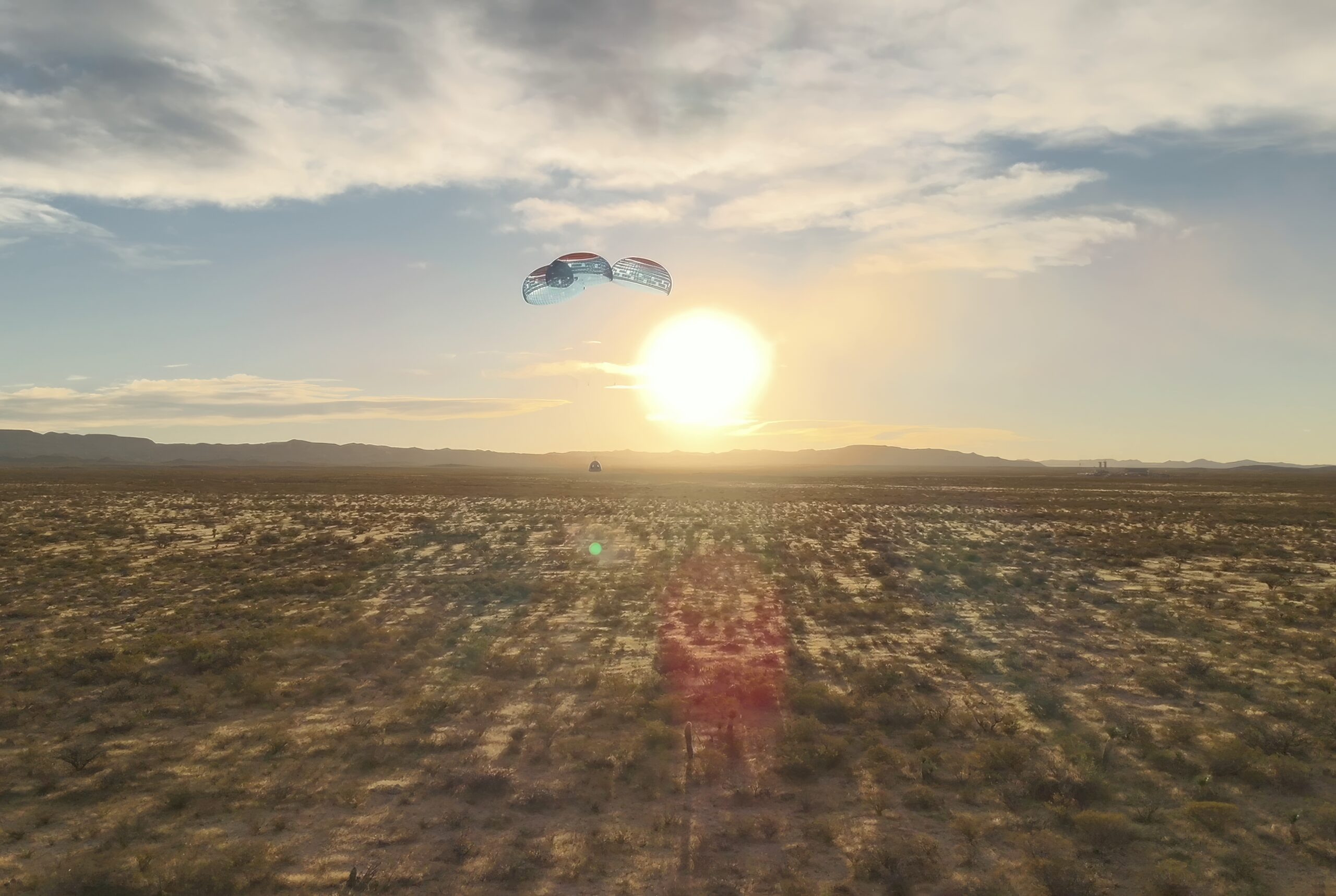
Blue Origin is scheduled to return to human spaceflight with its NS-38 mission on Thursday, Jan. 22. The New Shepard rocket is slated to lift off from Launch Site One in West Texas, with the launch window opening at 9:30 a.m. EST.
The mission will carry six private citizens across the Kármán line to experience several minutes of weightlessness and views of Earth against the blackness of space. To date, the company has sent 92 humans into the suborbital realm as the space tourism industry continues to grow. While Blue Origin has never publicly released the cost to fly on a New Shepard mission, applications require a $150,000 deposit.
This flight’s crew includes individuals from diverse backgrounds in aviation, medicine, and entrepreneurship. Tim Drexler, an award-winning civil contractor, dedicated decades to his family business before transitioning to a second chapter as a pilot. He is joined by Dr. Linda Edwards, a retired OB/GYN whose flight represents the culmination of a 40-year dream and a message of inspiration for women. Alain Fernandez, an international developer who rebuilt his life following a severe diving accident, views this mission as a testament to human resilience.
Also on board is Alberto Gutiérrez, a global traveler and tech founder who has explored over 100 countries and now seeks a view of the world from above. Jim Hendren, a retired Air Force Colonel and F-15 pilot, brings a career defined by public service and aviation. Rounding out the crew is Laura Stiles, Blue Origin’s director of New Shepard launch operations. Blue Origin announced Stiles as a crew member on the afternoon of Jan. 20 as a replacement for an original crew member who is unable to participate in the launch due to illness.
The NS-38 mission patch incorporates several personal tributes, including a beacon of light representing a crew member’s life motto, a stethoscope honoring medical service, and various aircraft symbols reflecting the crew’s shared passion for flight.
Watch the launch here.
Other missions this week
On Tuesday, Jan. 21, Isar Aerospace is aiming for the second test flight of its Spectrum rocket from the Andøya Rocket Range in Norway. The first flight, launched in March 2025, failed after liftoff due to an engine issue. The flight, carrying several small satellite payloads, is supported by the European Space Agency’s (ESA) Boost! program, which assists private companies in developing commercial launch services. Later that evening, a SpaceX Falcon 9 will launch a batch of Starlink satellites (Group 17-30) from California’s Vandenberg Space Force Base at 9:43 p.m. EST.
On Thursday, Jan. 22, Rocket Lab joins the action with its “The Cosmos Will See You Now” mission. An Electron rocket will depart from the Mahia Peninsula in New Zealand at 5:15 a.m. EST, carrying two satellites for commercial firm Open Cosmos into low Earth orbit.
The weekend begins with a Chinese commercial launch on Sunday, Jan. 25. A Jielong 3 rocket is scheduled to lift off from the Haiyang Oriental Spaceport in China’s Shandong Province at 1:30 a.m. EST, according to Next Spaceflight.
SpaceX rounds out the week with a double-header on Sunday, Jan. 25. First, a Falcon 9 will launch Starlink Group 17-20 from Vandenberg at 10:17 a.m. EST.
Then, late Sunday at 11:38 p.m. EST, a Falcon 9 will lift off from Cape Canaveral carrying the GPS III SV09 satellite, the ninth of a new generation of Global Positioning System spacecraft for the U.S. Space Force.
Last week’s recap
The previous week was packed with successful orbital deployments. The National Reconnaissance Office expanded its satellite network with the successful launch of NROL-105 on Jan. 16.
China saw significant activity across its various spaceports. On Jan. 13, a Long March 8A launched the SatNet LEO Group 18 mission from Wenchang, while a Long March 6A carried the Chinese military’s Yaogan 50-01 from Taiyuan. On Jan. 14, a Long March 2C deployed AlSat 3A, an Earth observation satellite, from Jiuquan. On Jan. 16, a Long March 3B/E lifted off with Shijian 32 from Xichang, but the rocket failed to reach orbit. Finally, on Jan. 19, a Long March 12 carried SatNet LEO Group 19 from Wenchang.
SpaceX also maintained its high cadence, successfully launching Starlink Groups 6-97, 6-98, and 6-100. Commercial provider Galactic Energy added to the tally with two Ceres rocket launches on Jan. 15 and 16.
Looking ahead
On Monday, Jan. 26, Rocket Lab’s “Bridging The Swarm” is scheduled to launch from New Zealand. SpaceX also has Starlink missions scheduled for Jan. 28 and 29 from both Florida and California.