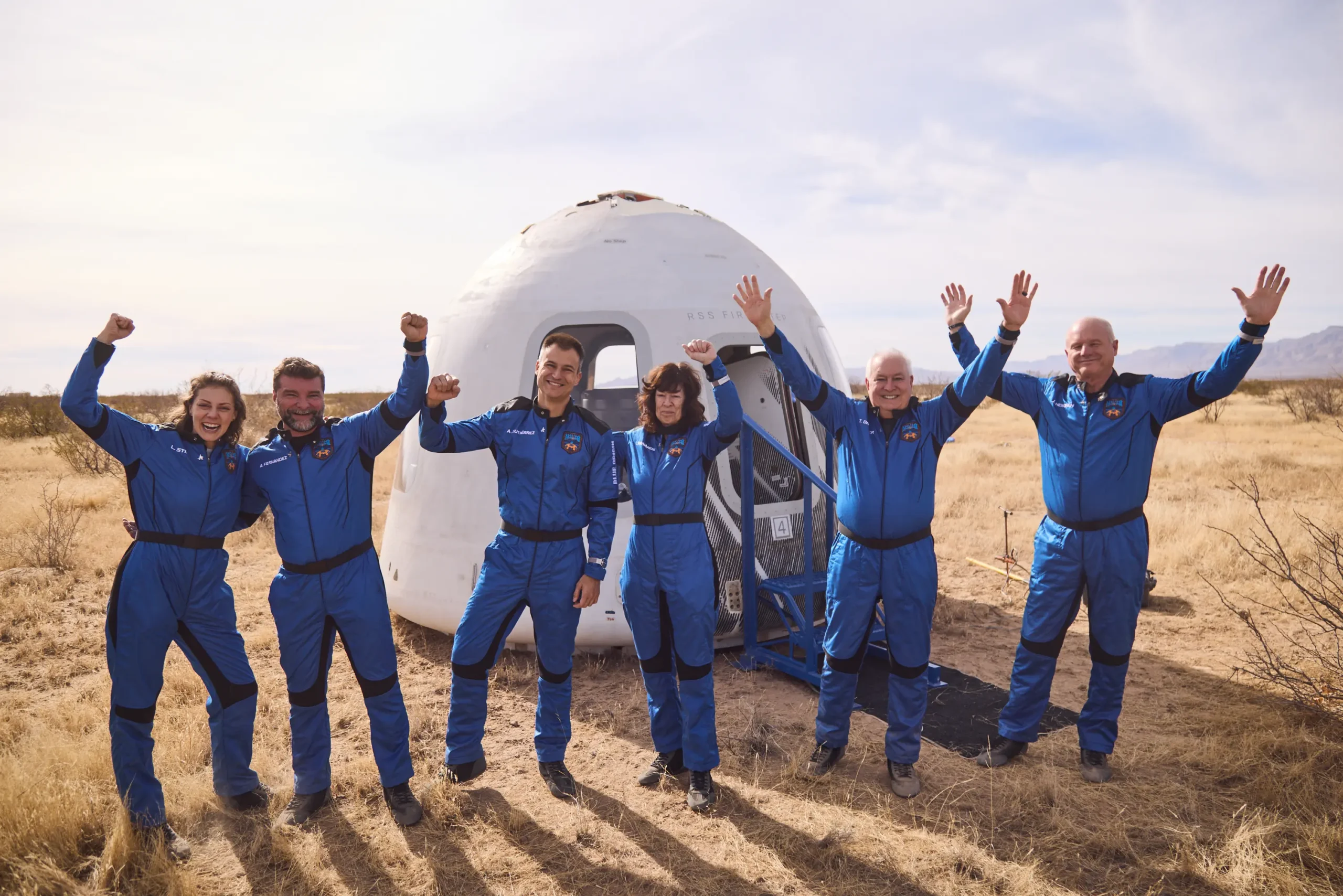
Blue Origin announced on Jan. 30, 2026, that it will pause New Shepard flights for at least two years. The company, owned by Amazon founder Jeff Bezos, is instead redirecting resources to lunar spaceflight.
New Shepard is a reusable spaceflight system designed for vertical landings. It has completed 38 flights and carried 98 people above the Kármán line — the internationally recognized boundary of space at an altitude of 62 miles (100 kilometers). New Shepard has also launched over 200 research payloads for NASA and other organizations.
The program is mostly known for carrying high-profile passengers to space. Ed Dwight became the oldest person to reach space during the NS-25 mission in May 2024 at age 90. He surpassed the record previously held by actor William Shatner, who flew on the NS-18 mission in October 2021. And in April 2025, pop star Katy Perry flew on the NS-31 mission — a flight that featured the first all-female crew and included broadcast journalist Gayle King and Lauren Sánchez, now Bezos’ wife. Seats have previously sold for up to $28 million at auction, and the company requires a $150,000 refundable deposit to begin the seat reservation process.
Days after Blue Origin’s statement, Elon Musk announced a similar pivot for SpaceX. In a post to X, Musk shared that his company has shifted its focus from Mars colonization to building a “self-growing city” on the Moon, targeting an uncrewed landing by 2027. Musk cited the logistical advantages of the Moon’s proximity — allowing for trips every 10 days versus 26-month launch windows for Mars — as a factor in accelerating development.
Lunar pivot
Blue Origin says that pausing New Shepard will allow it to shift focus to its lunar capabilities. The New Glenn heavy-lift rocket is one piece of this puzzle. This two-stage orbital launch vehicle stands 320 feet (98 meters) tall with a 23-foot (7-meter) payload fairing, allowing it to carry twice the volume of the SpaceX Falcon 9’s 17-foot (5.2-meter) fairing. New Glenn’s fully reusable first stage is powered by seven BE-4 engines and fueled by a combination of liquified natural gas and liquid oxygen. The second stage is powered by two BE-3U engines, which use a combination of liquid oxygen and liquid hydrogen.
New Glenn successfully reached orbit on its first launch (NG-1) in January 2025, though Blue Origin failed to recover the booster. On Nov. 13, 2025, the second mission (NG-2) successfully deployed NASA’s ESCAPADE spacecraft and recovered the first-stage booster on the ship Jacklyn.
In 2023, NASA selected Blue Origin for a $3.4 billion contract to develop the Blue Moon lander as the second human landing system provider for the Artemis program. NASA had previously contracted SpaceX’s Starship Human Landing System (HLS) for the Artemis 3 and Artemis 4 missions. Blue Origin will provide the lander for Artemis 5 and subsequent expeditions.
In October, Sean Duffy, serving as interim NASA administrator, announced the reopening of the Artemis 3 HLS contract. Duffy cited concerns that SpaceX was “behind” on development milestones. This announcement led both Blue Origin and SpaceX to submit revised landing architectures aimed at accelerating the mission’s timeline. Current NASA Administrator Jared Isaacman has made no mention of whether the contract remains open.
RELATED: How Artemis will land humans on the Moon
Blue Origin is developing two versions of the lander. The Mark 1 (MK1) is a robotic spacecraft designed to deliver up to 3.3 tons of cargo to the lunar surface. The Mark 2 (MK2) is a larger lander designed for the Artemis 5 mission in 2029. Unlike the MK1, the MK2 will require in-space refueling — a process that has not yet been demonstrated. It is designed to carry up to four astronauts to the moon’s surface and return them to lunar orbit. Both landers will be launched on Blue Origin’s New Glenn rocket.
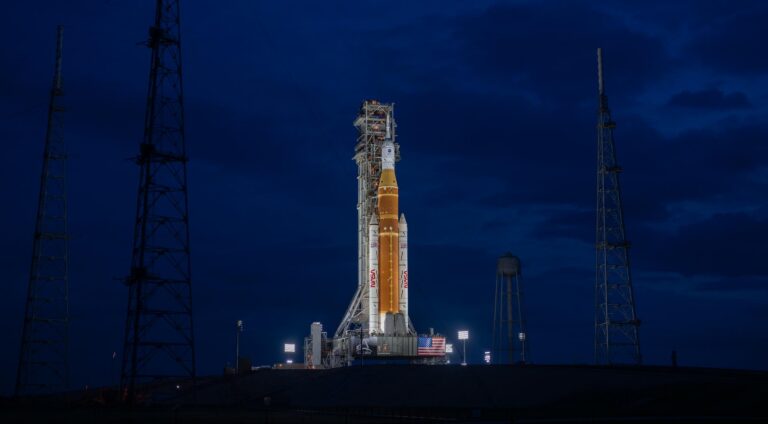
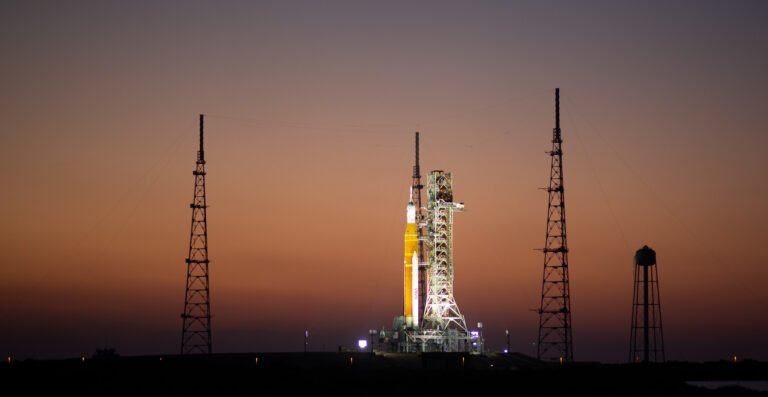
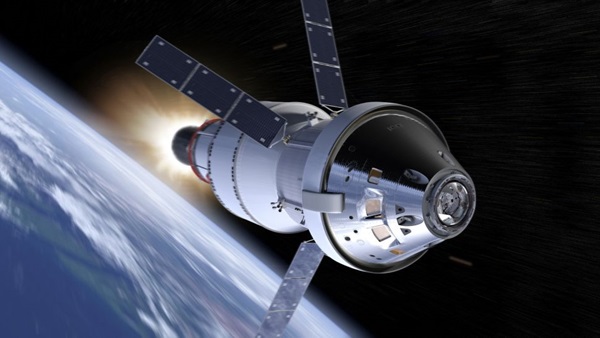
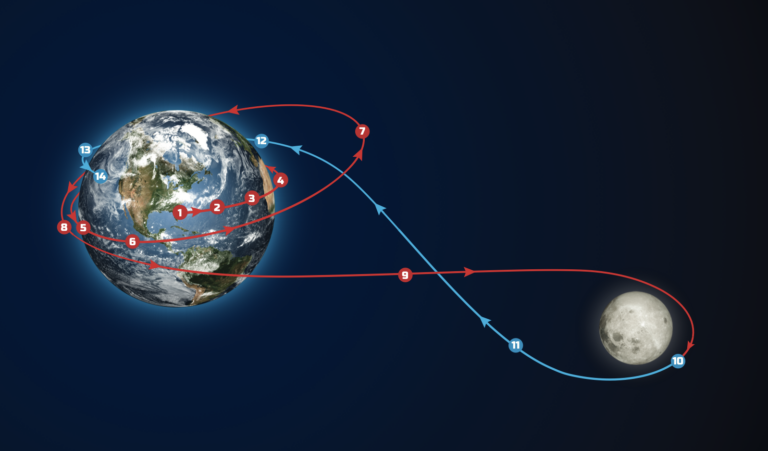
If all goes according to plan for Artemis 5, NASA’s SLS rocket will launch four astronauts aboard the Orion spacecraft no earlier than 2029. After docking with the Gateway station (which will tentatively launch in 2027), two astronauts will transfer to the Blue Moon MK2 for a weeklong stay at the Moon’s South Pole.