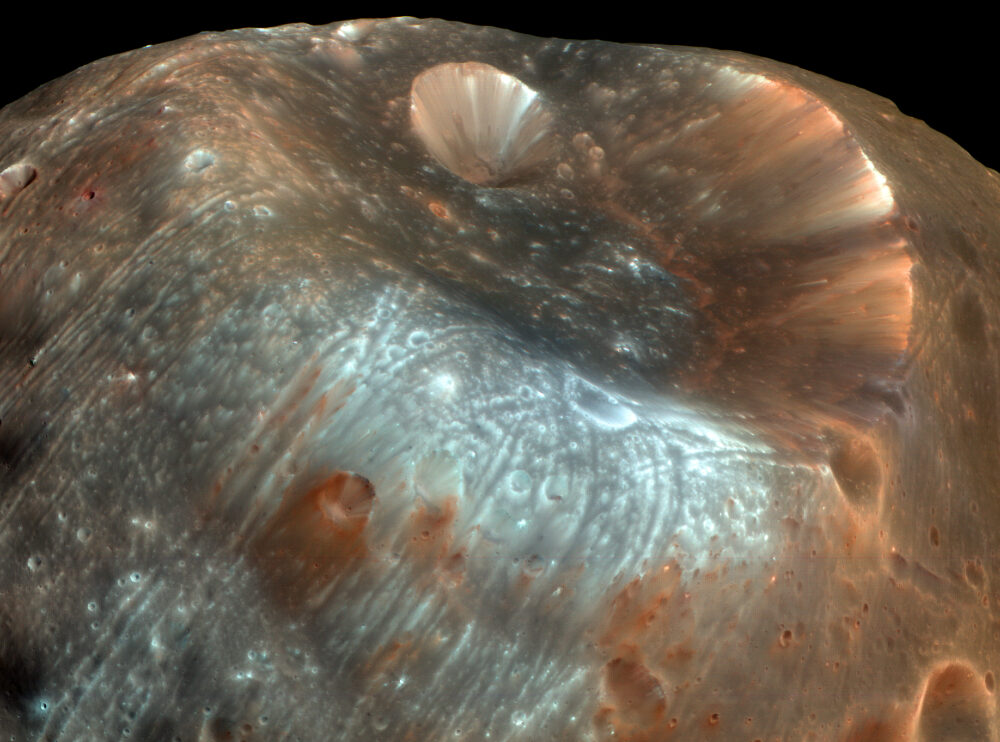
Astronomer Asaph Hall met Angeline Stickney at New York Central College in 1855. Two years his elder, she instructed him in geometry and German, and was reputedly so strong a mathematician that Hall and his classmate made a game of trying to stump her, yet never could. The pair were married the following year. For a while, Angeline helped her husband with his computations – but quit when he refused to pay her a man’s salary for the work. Still, she played a key role in his astronomical career: In 1877, when Hall grew frustrated with the weather at Foggy Bottom and nearly quit his search for the moons of Mars, Angeline convinced him to keep at it. Writing after discovering Deimos on Aug. 11 and Phobos on Aug. 17, Hall acknowledged her role: “The chance of finding a satellite appeared to be very slight, so that I might have abandoned the search had it not been for the encouragement of my wife.” Stickney Crater, the largest crater on Phobos, is named in her honor.