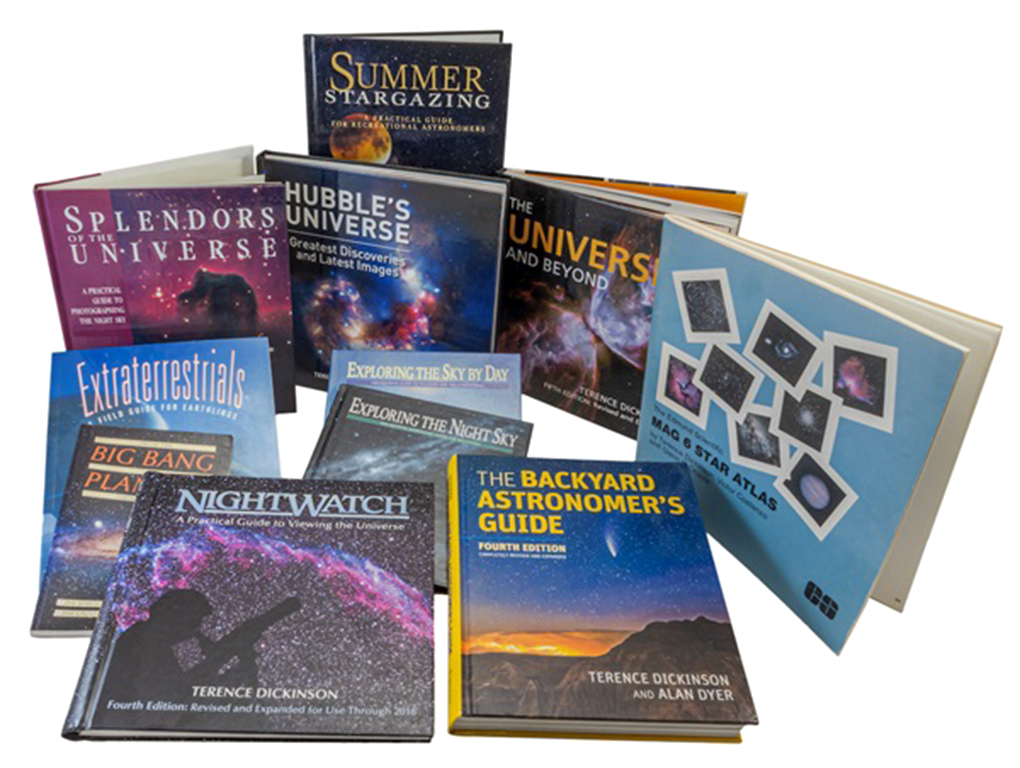
The September 2025 issue featured “A guide to beginner’s guides,” a reminiscence and description of some the books for astronomy beginners that Contributing Editor Raymond Shubinski recommends or considers influential. Our readers responded with a flood of emails adding their own suggestions to his list.
Is your favorite mentioned here? What books are we still overlooking? Write us at astronomyeditorial@astronomy.com with your thoughts!
Most recommended books
As we read through the many emails, some themes emerged: Several readers agreed with the recommendation of Patrick Moore’s guides, for instance. But beyond Shubinski’s list, four titles came up more often than all the rest.
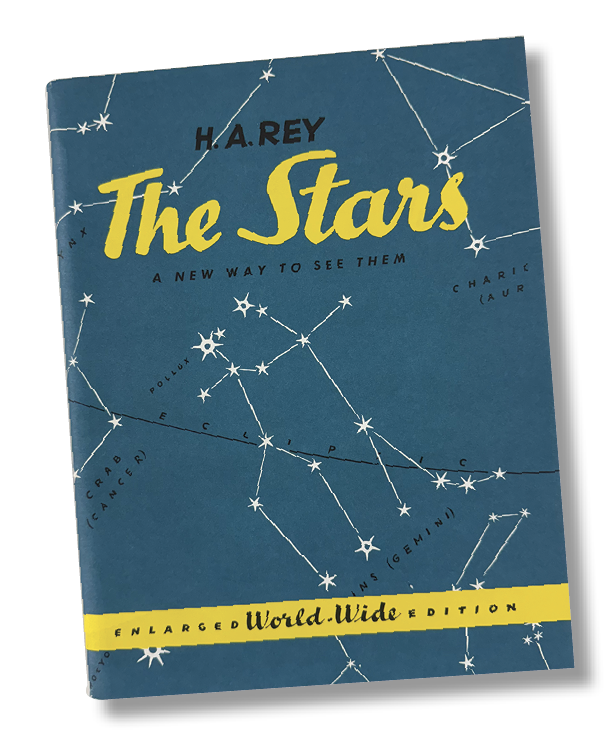
The Stars: A New Way to See Them, by H.A. Rey
“It shows the constellations as stick figures that once seen, are impossible to unsee. It was meant for 6th grade students, but the scientific descriptions are complex enough to please adults.” — Anna Tyner
“The book basically redrew constellations so that they looked much more like the mythological objects they were supposed to depict than any other publication I have seen since.” — Charley Tichenor
NightWatch: A Practical Guide to Viewing the Universe, by Terence Dickinson, and The Backyard Astronomer’s Guide, by Terence Dickinson and Alan Dyer
“Most of the books [Shubinski] mentions are 50 years old or older. Consider what’s changed in the field of astronomy in that time! How about [Dickinson’s] books, which are much more current?” — William M. Arden
“I learned a lot from The Backyard Astronomer’s Guide.” — George Reynolds
“I consider NightWatch a lot more practical [than some other guides] for use at the telescope. And there is The Backyard Astronomer’s Guide, which I recommend to any person who just getting into the hobby. I read the most recent edition cover to cover when I bought it. It is a great book for anyone at any level of skill.” — Dan Carey
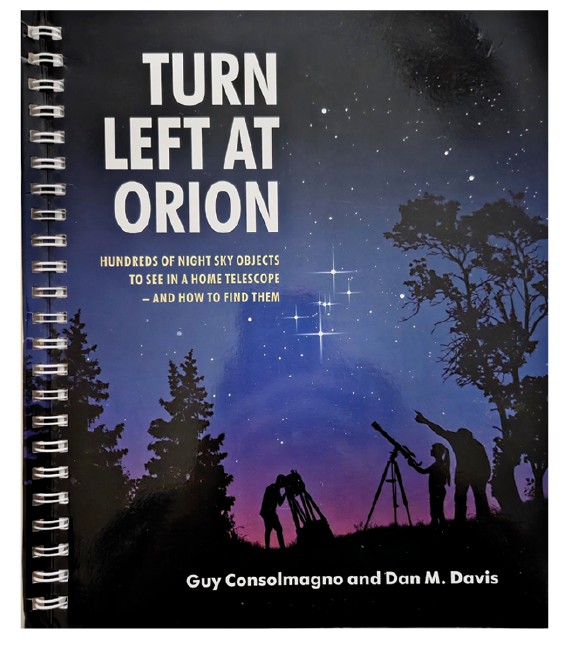
Turn Left at Orion, by Guy Consolmagno and Dan M. Davis
“An indispensable guide for beginners with small telescopes.” — Kevin Alcott
“[One of] my favorite books was Turn Left at Orionby Guy Consolmagno and Dan Davis.” — George Reynolds
Also on the shelf
Here are some of the other titles suggested — while they may have come up less frequently, they still got a lot of love from their readers!
How to Use Your Telescope, by Sam Brown
“It was the textbook that laid the foundation for selection and use of all of my further telescopes.” — Charley Tichenor
Sky Guide: A Field Guide for Amateur Astronomers, by Mark R. Chartrand III
“Apparently I used to take it everywhere because it’s totally marked up and held together with a rubber band and tape!” — Gary Auth
365 Starry Nights, by Chet Raymo
“A night-by-night guide with hand-drawn illustrations and easily followed text describing what is up — every night of the year!”— Gary Auth
A Field Guide to the Stars and Planets, by Donald H. Menzel
“I loved the Photographic Atlas Charts, where the right-hand page showed a photo of a portion of the sky, and the left page showed a negative image of the same photo, with simple constellation lines drawn and stars and deep sky objects labelled. The photos were made from plates taken at the Harvard College Observatory, over which the author presided.” — Mark Lancaster
What’s Out Tonight?, by Ken Graun
“The charts are a perfect balance between ‘Plot Plan’ and ‘Detail Drawing.’ I use it more than Sky Safari and my Pocket Sky Atlas.” — Michael A. Gebauer
1001 Questions Answered About Astronomy, by James S. Pickering
“The content was wonderful. I do wish someone would publish an updated version, organized in the same way.” — Kevin Alcott
Deep Sky Objects: A Photographic Guide for the Amateur, by Jack Newton
“A catalog of the Messier objects, with tips on how to find them in the night sky, and black-and-white photographs accompanying each entry.” — Kevin Alcott
Star Maps for Beginners, by I.M. Levitt and Roy K. Marshall
“In addition to the maps, I especially liked the page ‘Where to Find the Planets’ which showed where Venus, Mars, Jupiter, and Saturn were. This book was a cherished resource for me when starting out, and I spent many hours observing with my white Tasco telescope.” — Gary Cadle
Staff picks
What books prompted a lifelong interest in the sky for the Astronomy staff? Here are our editors’ picks for their favorite beginner’s guides or the books that influenced them most as young astronomers.
Mark, editor-in-chief: The Stars: A New Way to See Them, by H.A. Rey
Alison, senior editor: Star Maps for Beginners: 50th Anniversary Edition, by I.M. Levitt and Roy K. Marshall
Michael, associate editor: 1,001 Questions Answered About Astronomy, by James S. Pickering
Elisa, senior production editor: The New Patterns in the Sky: Myths and Legends of the Stars, by Julius D.W. Staal
More thoughts
“I am a retired planetarium educator. As often as I was asked to recommend telescopes for gifts, beginner guides to the skies followed immediately behind. Among those I recommend are H.A. Rey’s The Stars: A New Way to See Them, Chet Raymo’s 365 Starry Nights, and Terence Dickinson’s NightWatch. It has been my experience that potential stargazers become easily frustrated when trying to locate constellations. Each of these books in their own way makes the night sky a comfortable, friendly, and easy-to-navigate place.” — John C. Scala
“I was 8 years old and purchased my very first book at our elementary school’s annual book fair — Fun With Astronomy, by Mae and Ira Freeman. I’m now 76, retired with a Ph.D. in molecular biology, and can honestly say that book inspired my interest in science in general and my hobby of visual observations and astrophotography with my Celestron Evolution 8.” — Richard Montagna
“Back in 1973, my neighbor was cleaning out an attic space and had a pile of stuff for the garbage. A book titled Making Friends With the Stars caught my eye. I was engrossed in this book for the next several months. It showed how seasonal constellations change, described all the effects of 23.5° tilt, the ecliptic, zodiac, orbits, eclipses, planets — I was hooked at age 11 for life.” — Benito Rivera