Credit: NASA/JPL-Caltech/University of Arizona
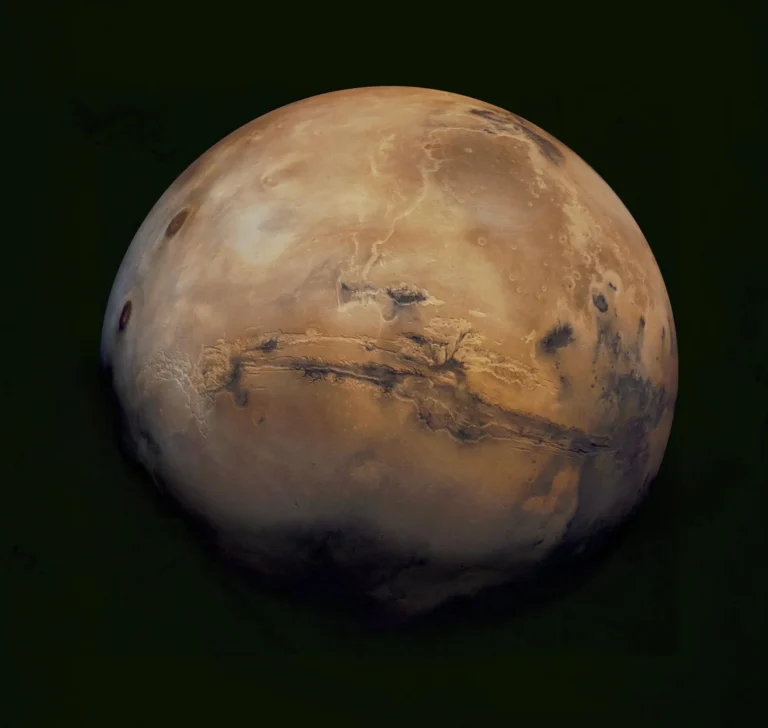
For more than a century, astronomers debated the possibility of martian canali (channels) which Italian astronomer Giovanni Schiaparelli claimed to see on the Red Planet in 1877. Mistranslated into English as “canals,” the term suggested artificial waterways, perhaps built by an intelligent civilization engineering its survival. Sci-fi writers churned out thrilling stories inspired by the claims, but as spacecraft brought Mars into focus, the canals dissolved into optical illusions caused by imperfect telescopes.
New research revives a piece of that story. Astronomers have mapped 16 large river systems that criss-crossed the surface of Mars about 3.7 billion years ago. While they weren’t crafted by Martians, the rivers transported staggering volumes of sediment, carved out the martian landscape, and may have nurtured habitable environments.
A watershed moment
In the 1960s and 1970s, NASA’s Mariner 4 and 9 spacecraft visited Mars and dashed some people’s hopes (and relieved other people’s worries) about finding cosmic neighbors. But there were some signs of past surface water that flowed billions of years ago. The Mars Global Surveyor mission clinched the theory in 1997 by finding ancient deltas, dried-up lakebeds, and layered sedimentary rocks. In the following decades, orbiters and rovers showed that early Mars was home to lakes, rivers, groundwater systems, and periodic floods.
“We already knew that valley networks on Mars fed lakes and that some of these lakes overtopped and carved large canyons during breach floods,” said Abdallah Zaki, a distinguished postdoctoral fellow at the University of Texas at Austin, who led the study. But no one knew how extensive the ancient river systems were, or how important they were for reshaping the martian surface.
“On Earth, our largest rivers and their drainage basins cover nearly half of the continents because climate and plate tectonics work together to build mountains and create space for rivers to flow,” Zaki said. “Mars, however, has no plate tectonics, but it still preserves compelling evidence of ancient valleys and river deposits. We wanted to know whether a planet without plate tectonics could still build large river systems, and how important these systems were for moving sediment and creating potentially habitable environments on early Mars.”
Almost half of the land on Earth is part of a watershed, a region that funnels rain into a major river like the Mississippi or the Amazon. To find where these drainage systems were on Mars, researchers used global maps of valley networks, canyons, ancient lakes, and preserved river deposits.
Previous models included a range of possibilities, from a planet with sporadic trickles of meltwater to one with extensive global river networks. The new findings suggest a middle ground: large rivers did exist, but they were geographically limited. The team identified 16 expansive, interlaced river systems, dating back about 3.7 billion years to the Early Hesperian Period. Though large, they collectively cover only about 5 percent of the martian surface.
“Despite this small fraction of area, these large systems produced nearly half of the river sediments we can account for on ancient Mars,” Zaki said. “This means that a relatively small number of very large rivers could have dominated sediment transport and landscape change on early Mars.”
Clues in the clay
The Early Hesperian Period was a time of transition for Mars. The planet was getting colder and drying out, but water still flowed across the surface in places, eroding the landscape and carrying sediment across great distances. That means the sediment interacted with water for a long time, which offered lots of opportunities for chemical reactions associated with life to occur.
“The presence of liquid water certainly allows for life to have existed at the surface,” said Bruce Jakosky, a professor emeritus at The University of Colorado Boulder and the principal investigator on the Mars Atmosphere and Volatile Evolution (MAVEN) mission. “It’s even possible that life, if it existed then, could still exist today,” perhaps underground.
On Earth, sediments deposited by large rivers preserve rich records and sometimes even fossils or chemical traces of ancient life. It could be the same on Mars.
“If life ever existed there, our work shows how large river systems could have sustained habitable conditions over long distances and long periods of time, and where their sedimentary record might still be preserved,” Zaki said. Now, scientists have a better idea of where to look for all of that eroded sediment. “It’s a valuable record of ancient habitable environments on Mars, and a key target for future missions looking for signs of past life.”
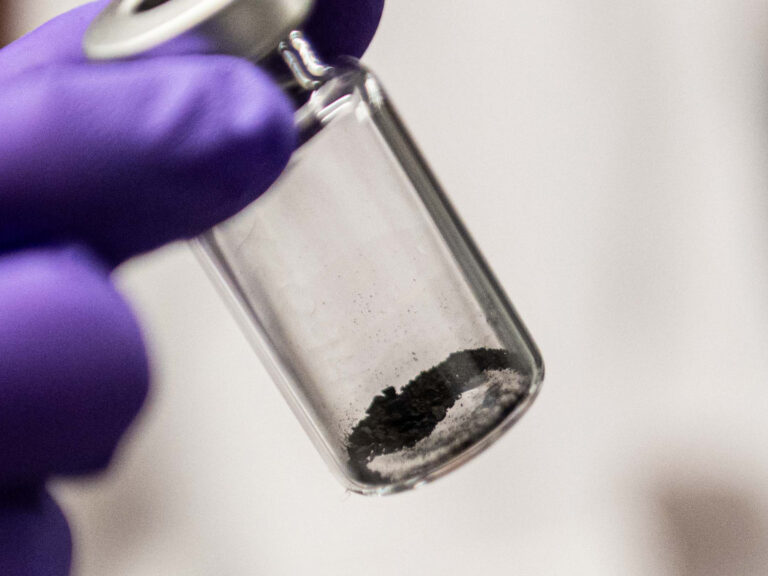
Humans may soon explore the martian surface in person and bring back samples to study on Earth. That could answer several other questions about the Red Planet’s past, including how (and how long) it held onto water.
“Future exploration of Mars will focus on understanding the history of liquid water, the climate that would have allowed it to be present, and whether there was ever life,” Jakosky said. “Many scientists think that we won’t be able to answer these questions until we send people to Mars to collect the right kinds of samples and bring them back to Earth.”
Via email, I had the chance to ask Abdallah Zaki, the lead author of the study a question.
Q: What is new about your findings, and how does it build on what we already knew about Mars?
A: We already knew that valley networks on Mars fed lakes and that some of these lakes overtopped and carved large canyons during breach floods. What we did not know was how important the largest river systems were for moving sediment across the planet. In this work, we show that large rivers comparable in size to Earth’s big river systems did exist on Mars, but they only occupy about 5 percent of the ancient martian surface older than 3.7 billion years — around nine times less area than their counterparts on Earth. Despite this small fraction of area, these large systems produced nearly half of the river sediments we can account for on ancient Mars. This means that a relatively small number of very large rivers could have dominated sediment transport and landscape change on early Mars.