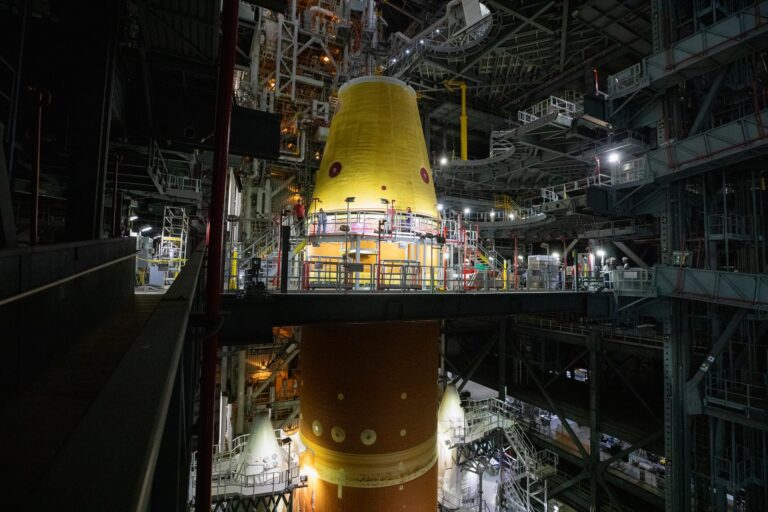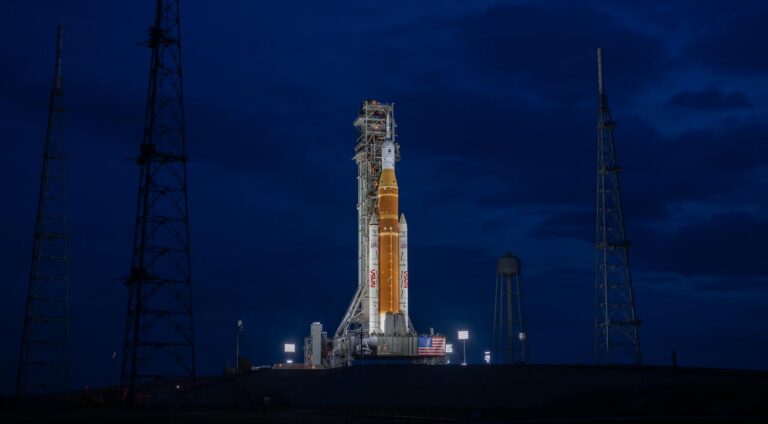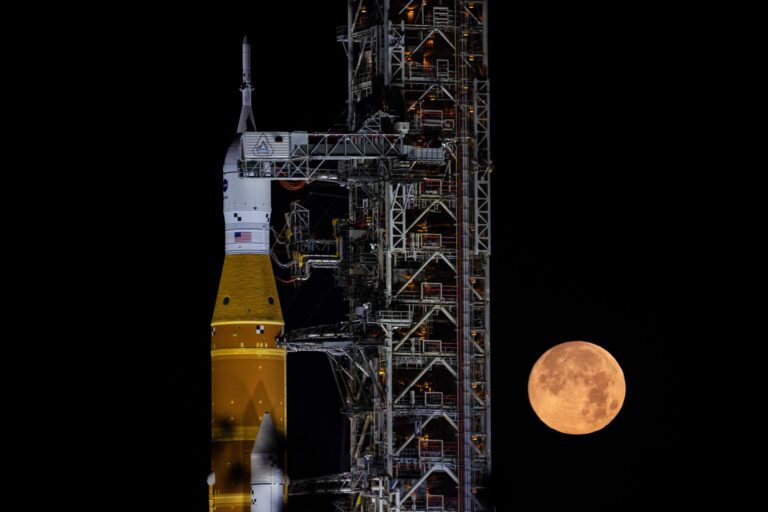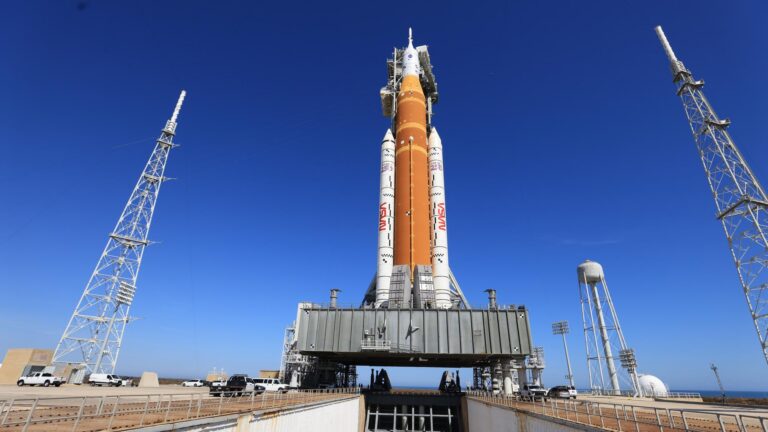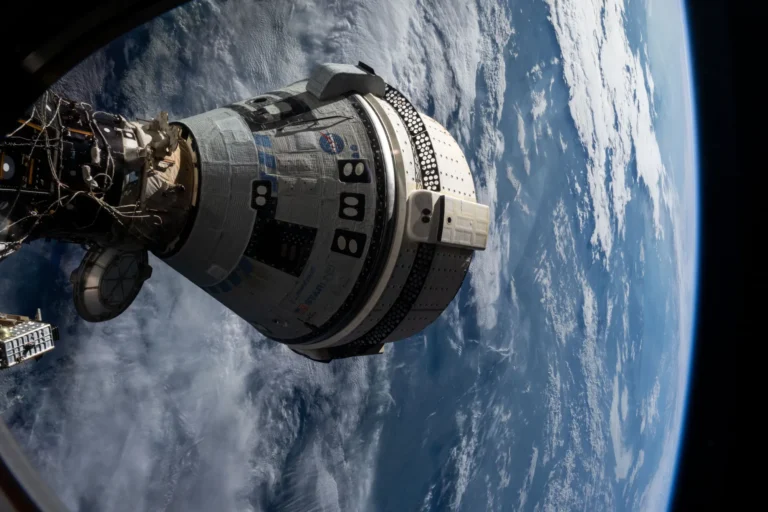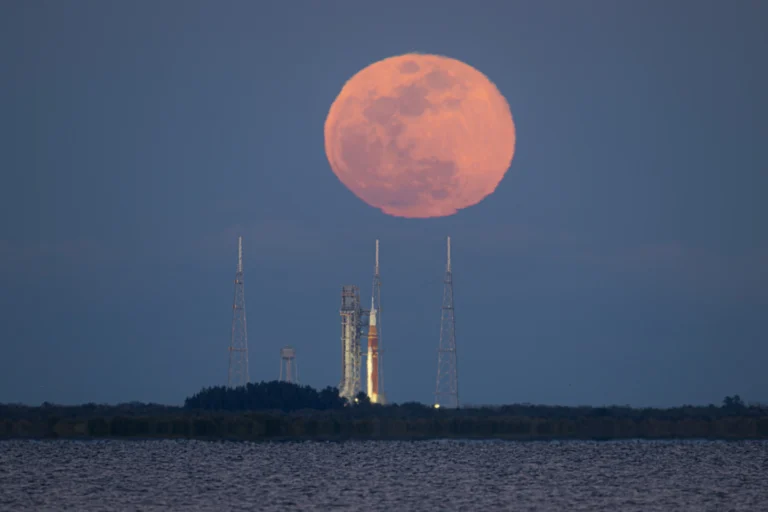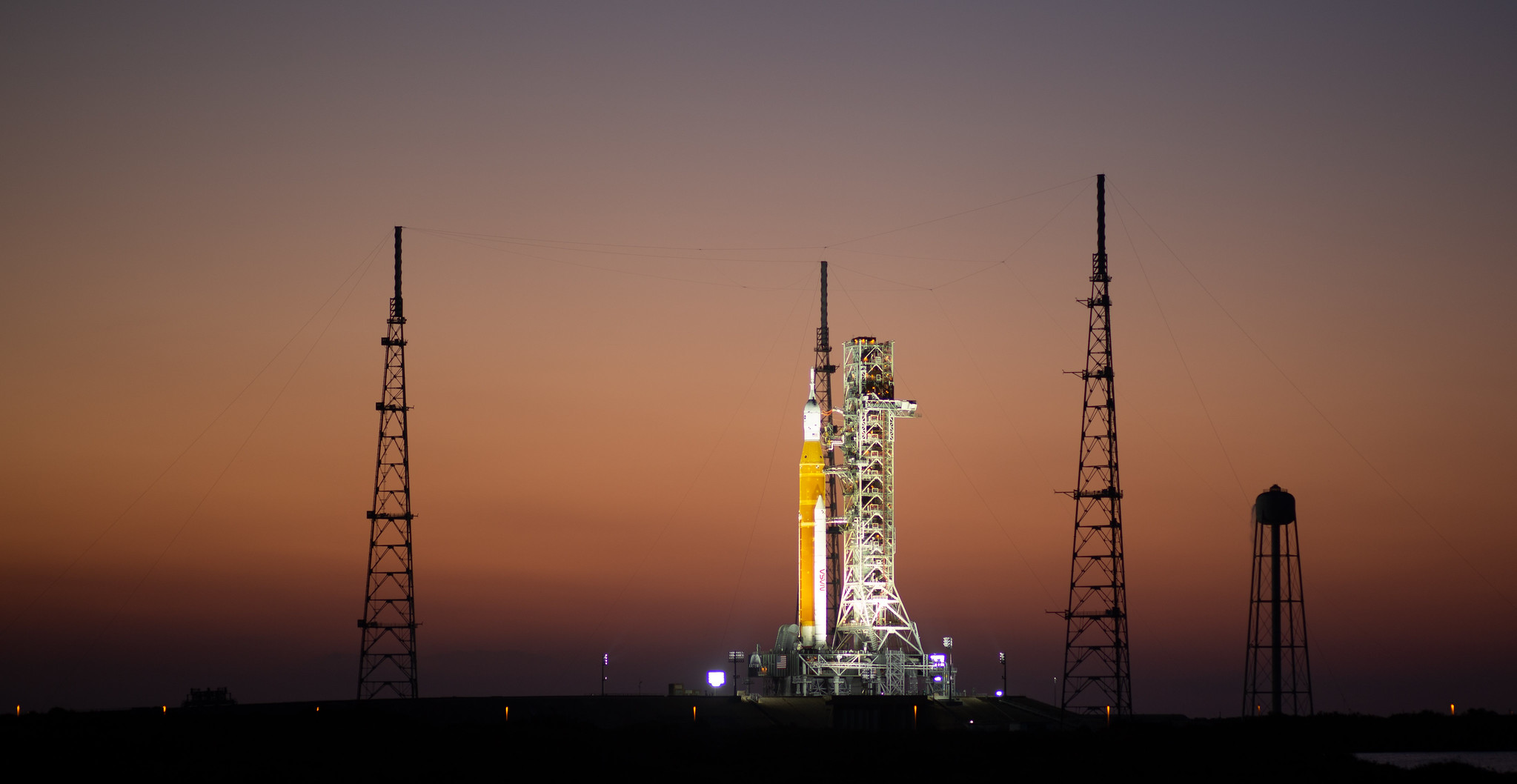
NASA completed a crucial test, a wet dress rehearsal, for its Artemis 2 mission early Tuesday morning, Feb. 3. Originally hoping to launch in early February, following challenges during the rehearsal, NASA is now targeting one of several launch windows in March for the mission. Nonetheless, the completion of the wet dress rehearsal moves the agency one step closer to returning astronauts to the Moon.
A wet dress rehearsal is the final practice run for a high-stakes rocket launch. The “wet” in the name refers to the loading of cryogenic fuel into the rocket’s massive tanks — around 700,000 gallons (2.6 million liters) of liquid hydrogen and oxygen in the case of Artemis 2. The rehearsal is a rigorous demonstration of ground team preparedness. Once fueling is complete, the team runs through a simulated launch countdown. This comprises several different runs, where the team practices holding and resuming the countdown to simulate real-world conditions and various potential scrub scenarios.
These tests are designed to verify the preparedness of the launch team and hardware. They enable NASA to identify technical issues in a controlled environment where a mistake doesn’t result in a lost mission, as well as practice troubleshooting in real time.
Two ticking clocks
The timelines for these operations span several days. The Artemis 2 rehearsal, for example, followed a sequence that technically began over 49 hours before the simulated liftoff. To manage complex timelines, NASA uses two separate timers. The L-minus clock counts down real-world time until the launch window opens and never stops. Meanwhile, the T-minus clock serves as a checklist that follows the completion of technical milestones, pausing and restarting as needed.
During a wet dress rehearsal, the T-minus clock is intentionally stopped or even reset during planned holds. These are strategic intervals used to practice different launch scenarios. The Artemis 2 wet dress rehearsal schedule included several of these, such as a several-minute pause at T-1 minute 30 seconds, as well as a second pause at T-33 seconds, after which the clock was to be recycled, or reset, back to the T-10-minute mark for a full run-through of the final countdown. This repetition is to ensure the team and the ground software are ready if a real launch is delayed due to technical or weather-related issues.
However, wet dress rehearsals also include unplanned holds to troubleshoot real-time anomalies. During the Artemis 2 rehearsal, the team paused the clock for several hours to manage a temperamental fuel line that was leaking liquid hydrogen while loading it into the rocket. Engineers tried to fix the issue by stopping the flow of propellant and allowing the hardware interfaces to warm up in an attempt to reseat the leaking seals. Although after troubleshooting, “teams successfully filled all tanks in both the core stage and the interim cryogenic propulsion stage,” according to NASA officials, the leak ultimately cut the test short during the terminal countdown phase.
The final countdown
The final 10 minutes on the T-minus clock, known as the terminal countdown, are the most intense phase of the test. At the T-10 minute mark, the Ground Launch Sequencer (GLS) takes over. The GLS is a ground-based computer system that automates critical external steps, such as retracting the crew access arm and switching the rocket to its own internal battery power.
At the T-33-second mark, the GLS hands over authority to the Automated Launch Sequencer (ALS) — the rocket’s onboard flight computer, which is responsible for the final high-speed ignition sequence.
The rules for holding the clock become much stricter during the terminal countdown. If a problem arises at the six-minute mark, the team can hold for the duration of the launch window. However, between six minutes and 90 seconds before launch, pauses are limited to three minutes. If an issue takes longer than three minutes to resolve, the team must recycle — resetting the clock back to the 10-minute mark to start the sequence over.
Once the clock ticks past the 90-second mark, any pause before the transition to the onboard ALS (i.e., before T-33 seconds) also requires a full recycle to T-10 minutes. On an actual launch day, the stakes reach their peak after the handover: once the rocket’s internal automated sequencer takes control in those final 33 seconds, any technical glitch or stop results in a total scrub, ending the launch attempt for the day.
During the Artemis 2 wet dress rehearsal, engineers successfully loaded all 700,000 gallons of propellant, but the recurring hydrogen leak eventually cut the countdown short at the T-5 minute 15-second mark, when the GLS recorded a spike in the amount of leaking fuel. This ended the wet dress rehearsal just minutes before NASA had a chance to demonstrate their planned holds or recycle the countdown. Those objectives are now top priorities during the next wet dress rehearsal.
Looking ahead
“Engineers pushed through several challenges during the two-day test and met many of the planned objectives,” NASA officials stated. Agency leaders are now analyzing the collected data and planning a second wet dress rehearsal before launch.
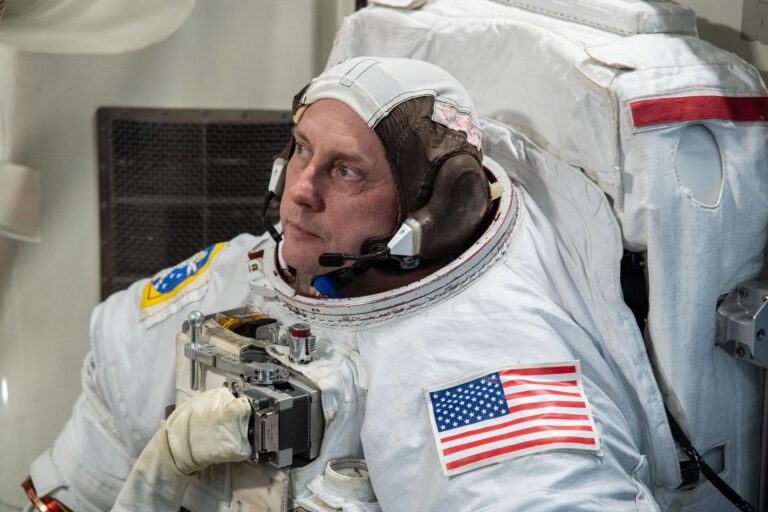
With the launch now aiming for March, the Artemis 2 crew — NASA astronauts Reid Wiseman, Victor Glover, and Christina Koch, and Canadian astronaut Jeremy Hansen — have ended their prelaunch quarantine in Houston. They will return to quarantine roughly two weeks before the next launch attempt.