Mission Highlight: A closer look at Starlink
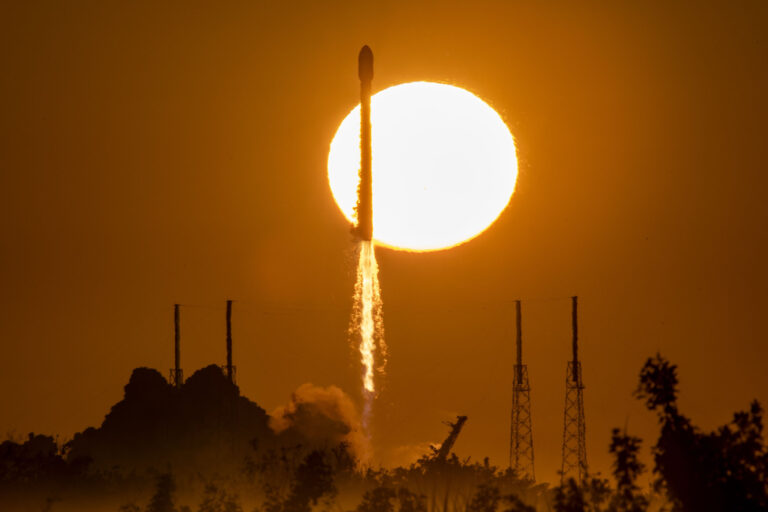
It’s a quiet launch week as we kick off the new year. With only four launches scheduled, let’s take a moment to focus on a mission that has become so ubiquitous it often goes unnoticed: Starlink. SpaceX ended 2025 with 165 launches — mostly Starlink — and with three more flights this week, the network continues to dominate global orbital activity. Now exceeding 9,000 operational satellites, this rapid deployment has revolutionized global connectivity, bringing high-speed internet to remote areas and providing critical communication for emergency responders during natural disasters.
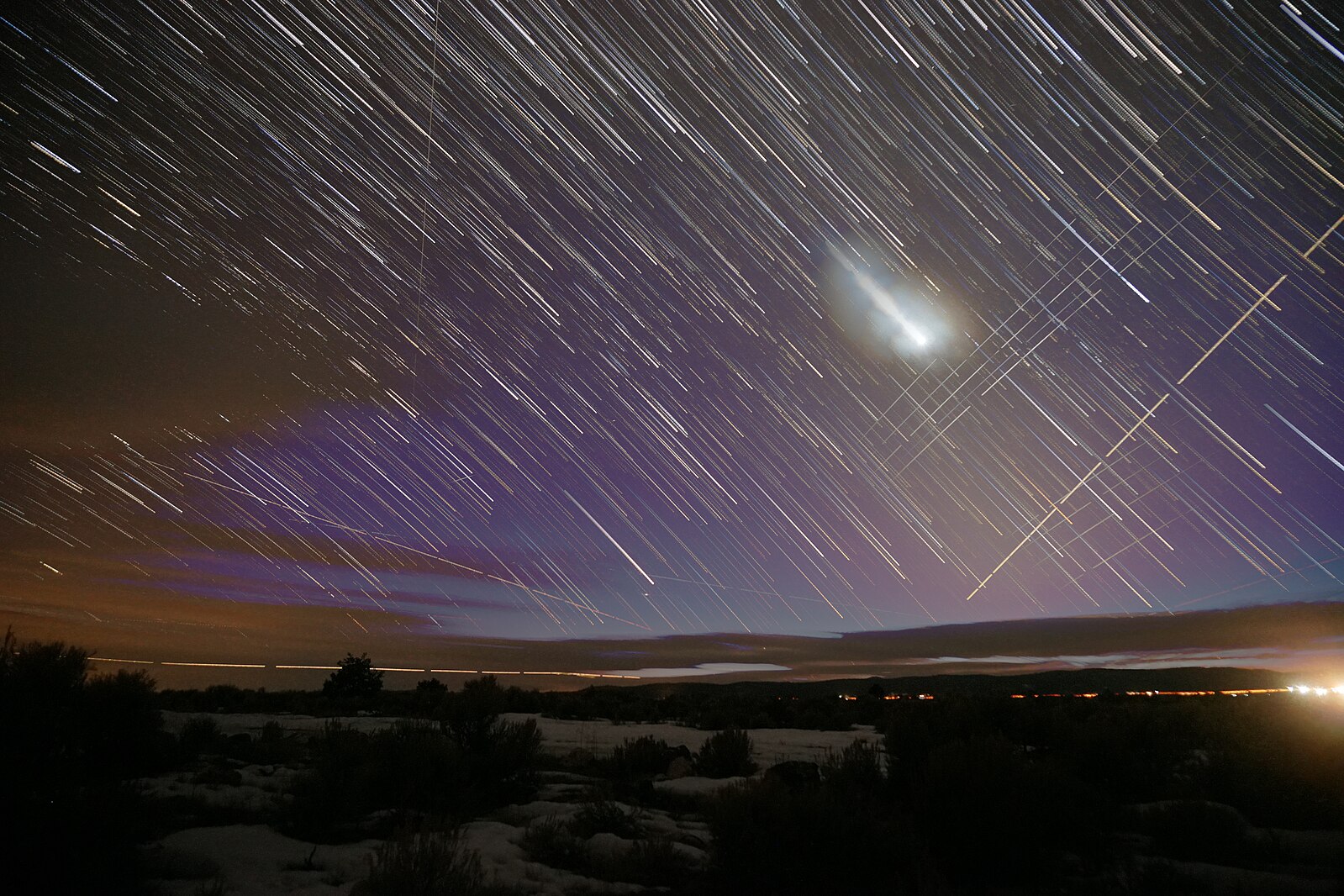
However, this unprecedented scale has introduced concerns centered on the satellites’ end-of-life disposal, environmental impact, and interference with astronomy. Because these spacecraft are built to vaporize completely in the atmosphere to avoid hitting the ground, they release tons of aluminum oxide annually. A 2024 study from the University of Southern California suggests these particles act as catalysts for ozone-depleting reactions, potentially hindering the recovery of the ozone layer as SpaceX pushes towards its 42,000-satellite goal. Furthermore, a study published in Nature warns that by the late 2030s, space-based observatories could face massive data contamination from satellites like Starlink, with NASA’s SPHEREx potentially seeing 96 percent of its images impacted by bright satellite trails. Beyond optical interference, radio astronomers are increasingly battling unintended electromagnetic radiation (UEMR) from Starlink. This random, noisy leakage from onboard electronics can interfere significantly with the faint cosmic signals radio telescopes study.
Despite these hurdles, there are some signs of cooperation. SpaceX has publicly committed to helping mitigate optical brightness issues, and according to Stephen Tingay, executive director of the Curtin Institute of Radio Astronomy, there have been active talks with the company about how to mitigate the UEMR issue moving forward. Groups like the International Astronomical Union are also advocating for solutions such as limiting satellite reflectivity, reducing bright flares caused by orientation changes, and performing transparent reflectance tests before launch. In addition to attempts at mitigating interference, SpaceX announced early this year that it plans to lower the orbit of thousands of Starlink satellites from around 340 to 320 miles (547 to 515 kilometers). According to an X post from Michael Nicolls, vice president of Starlink, this move will “increase space safety in several ways” by reducing the orbital decay of the satellites during solar minimum and reducing the likelihood of collisions with other spacecraft or debris.
As 2026 begins, the industry is hopefully moving toward a more collaborative relationship with the scientific community. With over 100 Starlink missions projected for this year alone, finding this common ground is essential to protecting our view of the cosmos while continuing to connect the planet.
Other missions this week
On Thursday, Jan. 8, at 1:29 p.m. EST, a Falcon 9 will launch the Starlink Group 6-96 batch from SLC-40 at Cape Canaveral Space Force Station. Following the launch, the first-stage booster is scheduled to land on the drone ship Just Read the Instructions stationed in the Atlantic Ocean.
On Saturday, Jan. 10, the cadence continues at 1:34 p.m. EST with the launch of Starlink Group 6-97, also departing from Cape Canaveral. This mission will utilize the drone ship A Shortfall of Gravitas for the recovery of the Falcon 9 first stage.
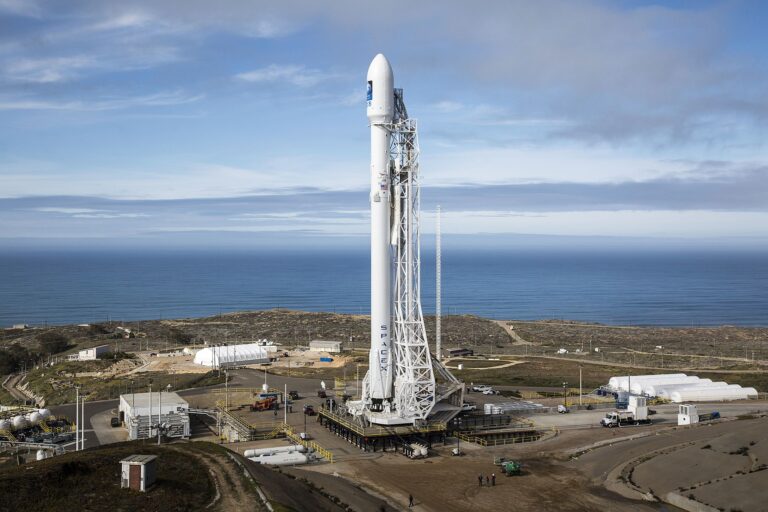
On Sunday, Jan. 11, the focus shifts to the West Coast at 8:09 a.m. EST for the Twilight rideshare mission. Launching from Vandenberg Space Force Base, the flight features NASA’s Pandora SmallSat, a specialized telescope designed to study the atmospheres of exoplanets.
Later that evening, on Sunday, Jan. 11, at 11:47 p.m. EST, the Indian Space Research Organisation (ISRO) will conduct its first launch of the year from the Satish Dhawan Space Centre in India. A PSLV-DL rocket will carry EOS-N1 (Anvesha), a hyperspectral imaging satellite that provides high-resolution data for agricultural monitoring and other strategic applications.
Last week’s recap
The final days of 2025 and the first of 2026 were somewhat slow as well with only four launches taking place. On Dec. 29 and Dec. 30, China concluded its record-setting 90-plus-launch year with the successful deployments of the Tianhui 7 satellite on a Long March 4B and the Shijian 29 A-B twin satellites on a Long March 7A.
SpaceX kicked off the year on Jan. 2 with the successful launch of Italy’s CSG-3 radar satellite from Vandenberg. SpaceX then launched its first Starlink mission of 2026 on Jan. 4 with Starlink Group 6-88, successfully deploying another batch of internet satellites and landing the booster in the Atlantic.
Looking ahead
On Wednesday, Jan. 14, at 1:01 p.m. EST, SpaceX is scheduled to launch Starlink Group 6-98 from Cape Canaveral Space Force Station, targeting a landing on the drone ship A Shortfall of Gravitas.