Key Takeaways:
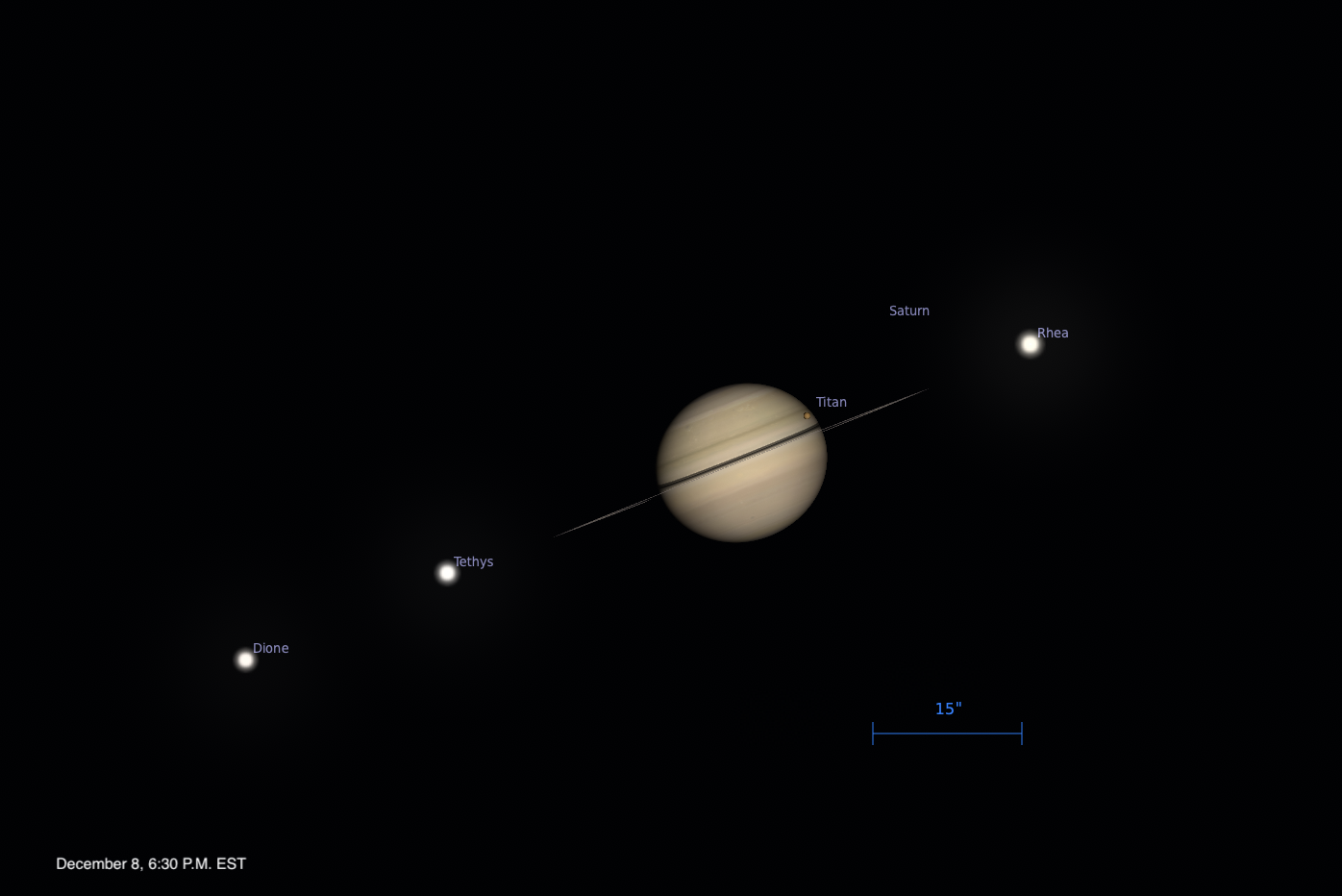
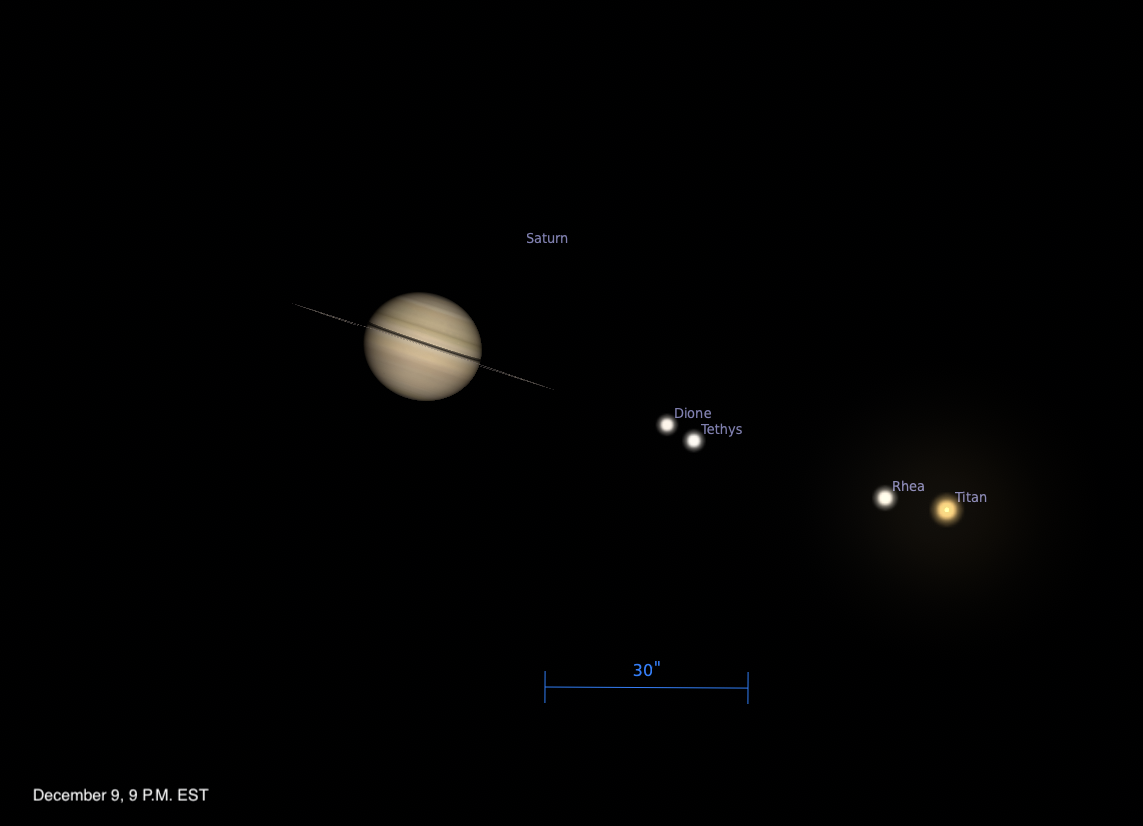
- On December 8, the relative orbital motion of Saturn's 10th-magnitude moons Dione and Tethys can be observed, culminating in Dione appearing to skim 1″ north of Tethys between 10 and 11 P.M. EST.
- The Moon will pass 0.7° north of Regulus at 2 A.M. EST on December 10, resulting in an occultation for observers in Greenland and northern Canada, while others will witness a close approach.
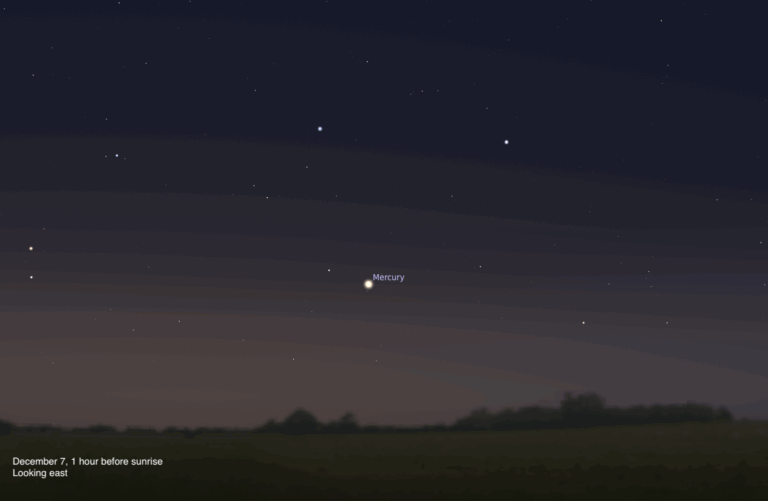
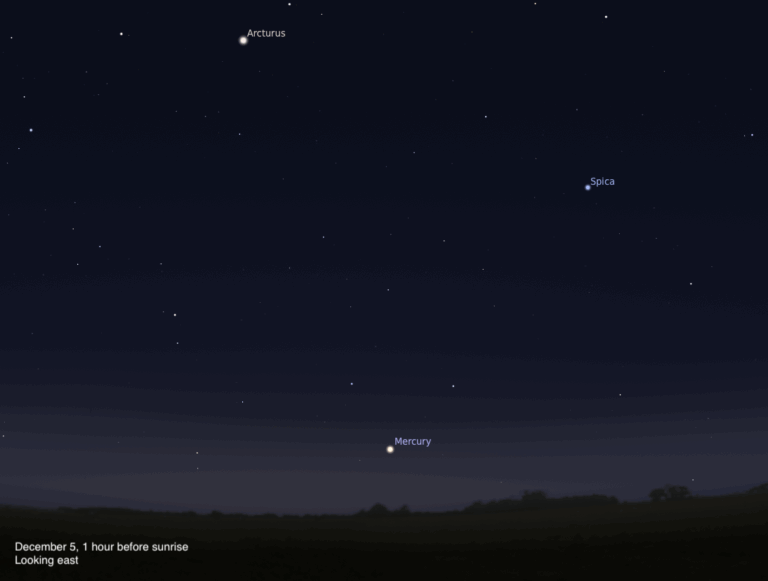
- On the morning of December 10, Mercury will be visible at magnitude –0.5, rising around 5:30 A.M. local time and presenting a 70 percent illuminated phase through telescopic observation.
- The article also provides specific local times for sunrise, sunset, moonrise, and moonset from 40° N 90° W, noting the Moon's phase as 67% waning gibbous.
Looking for a sky event this week? Check out our full Sky This Week column.
December 8: Saturn’s moons shine
Tonight two of Saturn’s 10th-magnitude moons, Dione and Tethys, show off their relative motions as they orbit the ringed world.
Look for Saturn in the south after dark, easy to spot at 1st magnitude. Train your telescope on the ringed world and early in the evening, you’ll see a gaggle of moons located just to the planet’s west. Closest is Dione, followed by Tethys, then Rhea, and capped by brighter Titan.
But keep watching. Both Dione and Tethys are moving west, but Dione appears to be moving faster, slowly catching up to Tethys. Between 10 and 11 P.M. EST, Dione finally catches up. The two moons will likely appear to merge for a time as Dione skims just 1″ north of Tethys, then pulls away to the west. It’s a fascinating event to watch unfold, showing clearly orbital dynamics in motion.
Sunrise: 7:10 A.M.
Sunset: 4:34 P.M.
Moonrise: 10:02 P.M.
Moonset: 11:20 A.M.
Moon Phase: Waning gibbous (67%)
*Times for sunrise, sunset, moonrise, and moonset are given in local time from 40° N 90° W. The Moon’s illumination is given at 10 P.M. local time from the same location.
The Moon passes 0.7° north of Regulus at 2 A.M. EST on December 10. Observers in Greenland and northern Canada will see our satellite occult this star, while others will simply see it pass close by without blocking its light. Rising before midnight, you can watch the Moon’s progress as Leo climbs in the eastern sky. For some observers along the West Coast, the Moon will pass the star while both are quite low in the sky.
Mercury is also visible in the early-morning sky of the 10th, shining at magnitude –0.5 and rising around 5:30 A.M. local time. It is some 7° high an hour before sunrise. Through a telescope, its phase has increased from earlier in the week, and the planet is now 70 percent lit.